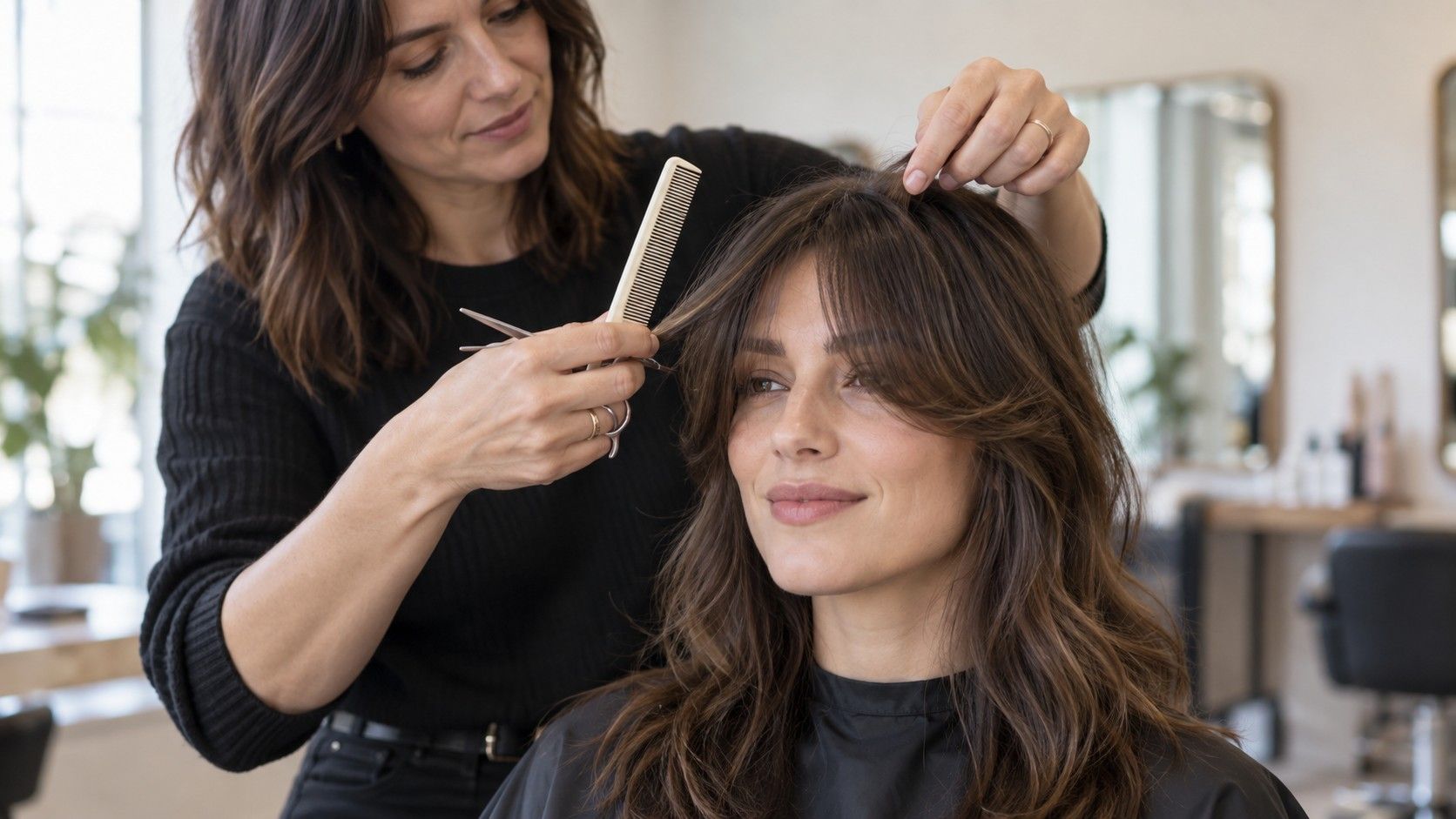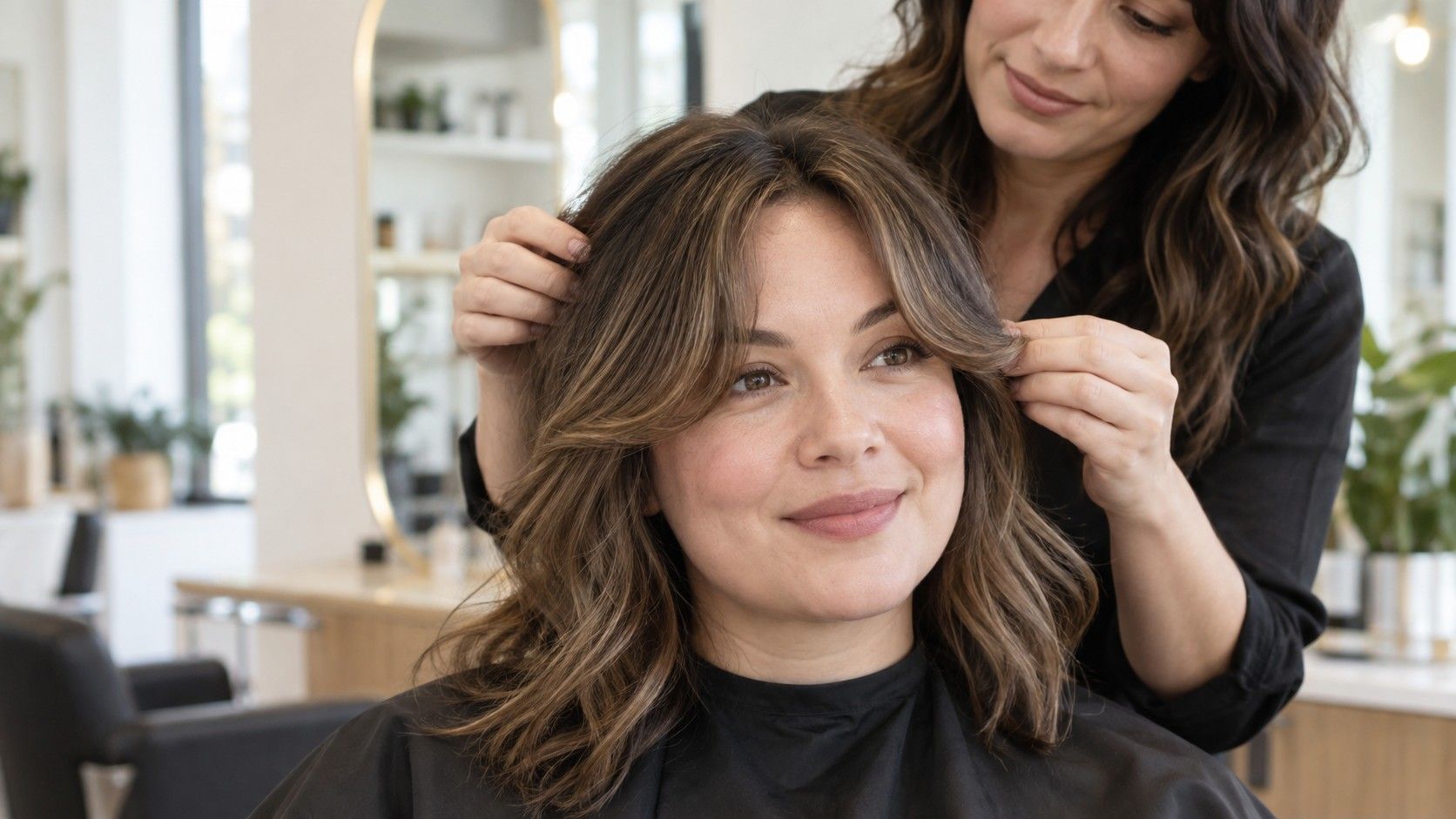
A square face is not a problem a haircut needs to hide. It usually means the forehead, cheekbones, and jaw read with similar width, while the jawline has a clear horizontal presence. The useful question is less “How do I soften this?” and more “Which length, parting, and texture give me the balance I enjoy when the salon styling has washed out?”
Use face shape as a starting point, not a verdict
Face-shape advice becomes unhelpful when it ignores the rest of the head. A square jaw can sit with a high forehead, prominent cheekbones, a short neck, or thick hair that expands at the sides. Glasses, a habitual part, and even the way you hold your posture change what you notice first. Treat the shape as one measurement in a larger fitting process.
Look at a photo taken straight on in soft daylight, with your hair pulled back loosely. The aim is not to diagnose yourself with geometry. It is to see whether you prefer more vertical length, softer movement at the cheeks, or an open forehead. Then look at the same image in profile. A hairstyle that looks balanced from the front can feel too blunt around the jaw from the side if the ends stop at exactly the widest point.
The best hairstyle for a square face should also work with your texture. Fine straight hair may need a cleaner shape and a little strategic lift; dense waves can provide softness naturally but may need controlled width. Copying a layered celebrity photo without matching its texture is how a promising idea becomes a daily styling obligation.
Choose a length by where the ends land
Length changes the visual balance more reliably than a dramatic rule about “softening.” A cut that ends at the jaw can make that line a deliberate feature, which is excellent if you like a bold bob. If you would rather shift attention upward or downward, choose a line just above the jaw with visible texture, or let the hair pass the jaw and land around the collarbone.
A collarbone lob is popular for a practical reason: it gives the face some vertical movement while still allowing clips and a small ponytail. It is not automatically flattering, however. Hair that is very straight and cut blunt at the widest part of the shoulders can create a broad horizontal shelf. A gentle A-line, soft ends, or face framing can change that effect without turning the haircut into a different person’s style.
Longer hair creates room for layers and a vertical line, but only when the ends remain healthy. Thin, damaged length can draw the eye down in an unflattering way and often requires more work than a well-cut medium length. Ask where the shortest face-framing piece will fall when your hair is dry. Cheekbone to jaw-length framing can add movement; a heavy block exactly at the jaw can feel severe if that is not the effect you want.
| Length choice | What it tends to emphasize | Useful adjustment |
|---|---|---|
| Jaw-length bob | A strong, intentional jawline | Add bend, texture, or a slightly longer front if you want less severity |
| Shoulder or collarbone lob | Vertical length and daily versatility | Check where ends meet shoulders and whether a blunt line feels too wide |
| Long layered cut | Movement below the face and styling options | Keep the lower perimeter substantial and avoid overly short crown layers |
| Short textured crop | Eyes, cheekbones, and the whole face | Use a soft fringe or side direction if that suits your routine |
Use bangs and face framing for a specific purpose
Curtain bangs can work well because they create a vertical opening through the center and taper into the cheek area. Their success depends on the starting point and density. Very thick, short curtains can become two rigid brackets; very sparse ones may vanish by noon. Ask to see them with your usual part, not only with a salon blowout holding every section in place.
A soft side fringe can shift the visual emphasis diagonally, which many people enjoy with a square face. The compromise is upkeep. If your hair naturally parts in the center, a side fringe may need daily direction with a dryer. Do not choose it solely because a face-shape chart called it ideal. Choose it if you are willing to encourage that part most mornings.
Face-framing layers should blend. Pieces beginning near the cheekbones can soften the transition between forehead and jaw, while longer pieces that pass the jaw add flow without covering the face. Avoid assuming every short layer is flattering: on thick hair, a lot of cut-in width around the cheeks can make the whole silhouette broader. The mirror test is to view the shape from a few steps back, not with your nose against the glass.
Compare a bob with a longer layered cut honestly
A bob is a strong choice if you like clean lines and want the jawline to be part of the look. A softly textured bob, a side-swept fringe, or a front that runs a little longer can make it feel less graphic. It does ask for regular trims, and a blunt jaw-length line will be noticed every time you tuck one side behind an ear. That clarity is the point for some people and a nuisance for others.
A longer layered cut offers more ways to create vertical movement. It can be worn with a center part, a casual bend, or hair pulled back while leaving a few pieces around the face. The risk is vague layering: if the layers are all cut high and the ends are thinned too much, the hair can expand at the sides and lose its lower weight. Requesting “soft layers” is not enough; ask where they will start and how the perimeter will stay intact.
There is no obligation to make the face appear oval. A square face often looks striking with a short blunt cut, a sleek center part, or an updo that reveals the jawline. The better comparison is between how much structure you want and how much styling you will do. A textured lob may be easier for an air-dryer; a sharp bob may be worth the five extra minutes if its precision feels like you.
Adapt inspiration to your own density, curl pattern, and part
Bring more than one reference photo: one for the overall length, one for the fringe or face frame, and one that resembles your texture. A stylist can combine those details more intelligently than they can reproduce a single image taken under studio lights. Point out which part of each photo you like. Often it is not the entire haircut but the way the ends curve, the lift at the crown, or the openness around the eyes.
Density changes the plan. Fine hair may benefit from a more solid line and restrained layers so that the sides do not disappear. Thick hair can support movement, but it may need internal shaping to avoid a wide outline. Curly hair adds shrinkage to the equation, so a jaw-length request should be judged dry. The same apparent haircut is built differently on each of these heads.
Your part is a useful piece of evidence. A center part creates symmetry and can look wonderfully modern with a square jaw, but it also exposes both sides equally. A side part introduces a diagonal and may give flatter roots some lift. Try both at home for a few days before the appointment. It is a small experiment that can prevent a haircut from being refined around a part you never actually wear.
Make the salon conversation and home routine match
Say how you style your hair on a normal morning. If you air-dry, ask the stylist to assess the cut with minimal heat. If you regularly use a round brush, mention whether you prefer the ends under, outward, or nearly straight. A hairstyle judged only after a dramatic salon wave is not enough evidence that it will support your real routine.
Ask for a practical maintenance estimate. Short fringes and sharp bobs need earlier attention than long face framing; a long layered cut can go longer but may need occasional cleanup to protect the shape. This is not a minor detail. The best haircut for square face is one you still like when it has grown for six weeks and the weather has made your styling less cooperative.
Finally, give yourself permission to choose definition rather than disguise. The goal is not to erase a jawline or obey a chart. It is to place the weight, texture, and length where you feel most like yourself. When those decisions fit your hair and your morning habits, a square face becomes useful information, not a constraint.