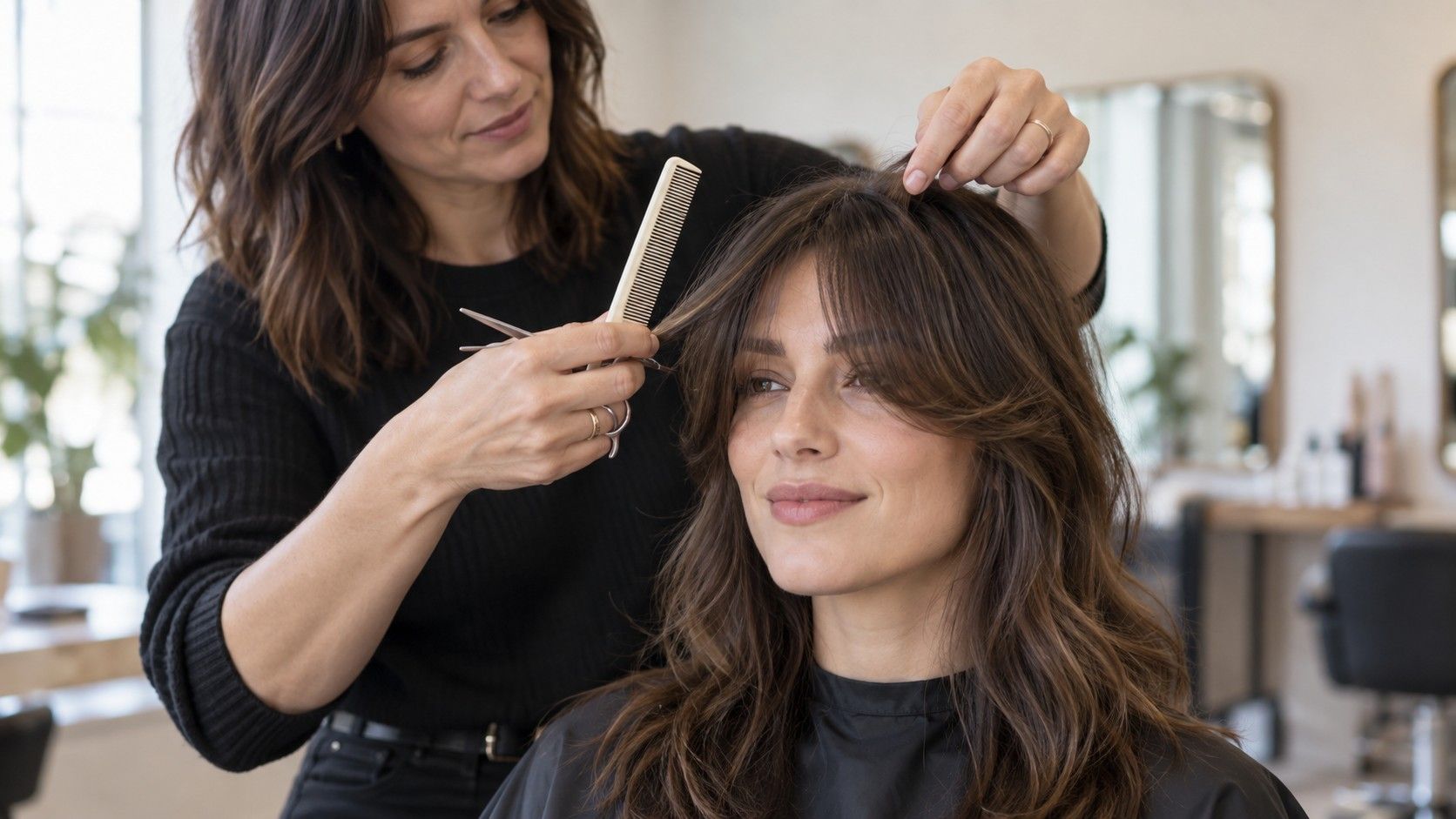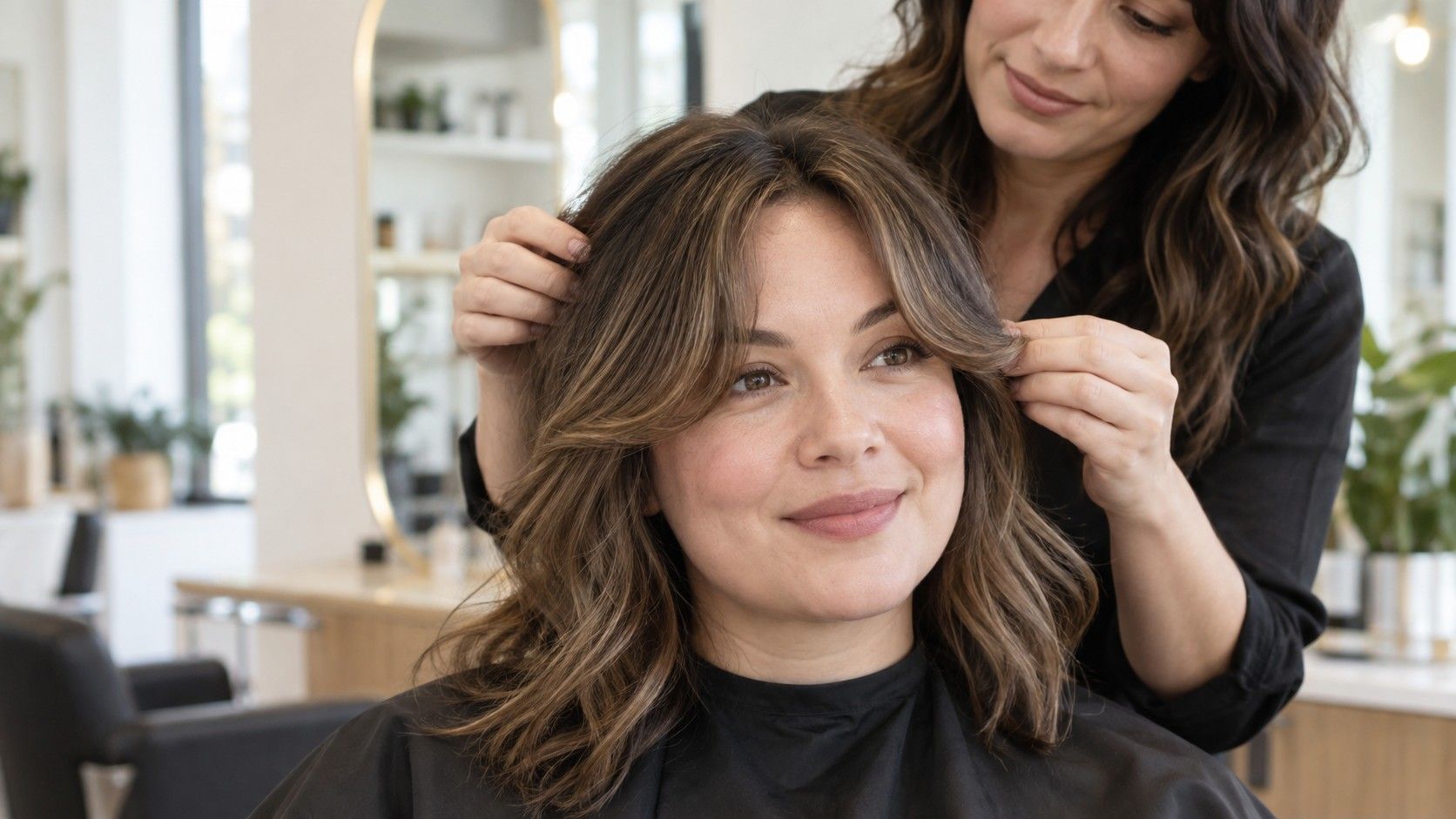
Bangs can change a haircut faster than almost anything else, which is why a search for bangs for my face shape produces so much confident advice. The trouble is that a face-shape label cannot tell you where your hairline begins, whether the fringe will split at a cowlick, or how it looks after a rainy walk. Use the outline of your face as a clue, then make the final call with your texture, density, and real morning routine.
Face shape is a starting point, not permission
Pull your hair back and look at the forehead, cheekbones, jawline, and chin in daylight. A round face has softer width through the cheeks; a square face shows more angle at the jaw; a heart-shaped face is often wider at the upper face and narrower at the chin. An oval face has more length than width. These descriptions can help you predict where a strong fringe line will land, but few faces fit one label exactly.
A fringe does not correct a face. It changes the frame around it. A thick horizontal edge places attention at the brow; a side-swept fringe creates a diagonal; a curtain fringe leaves a vertical opening. If you love the drama of a full fringe, that is a good reason to wear one. Just do not let a chart persuade you that a style you enjoy is somehow forbidden.
Choose width, length, and density separately
Most fringe disappointments come from treating “light bangs” as one instruction. Width is how far the fringe spreads across the forehead. Length is where it meets the eye area. Density is how much hair is brought forward from the crown. A shallow, wispy section can still be wide; a narrow fringe can still be very dense. Naming these choices makes a consultation much clearer.
For a cautious first cut, ask to keep the centre longer and the outer corners soft. That gives the stylist room to refine after the hair dries. If the fringe is cut wet and very short, waves can spring upward and a cowlick can expose the line you hoped to soften. A few extra millimetres are easy to remove; they are impossible to add on the day.
| Fringe shape | Useful when | Check before cutting |
|---|---|---|
| Curtain bangs | You want coverage with an open centre | Whether a centre part fights your cowlick |
| Side-swept fringe | You prefer an angled, softer outline | Your natural part and glasses |
| Wispy full fringe | You want brow coverage without a heavy edge | How fine hair separates by afternoon |
| Dense blunt fringe | You want a graphic, deliberate statement | Trim schedule and humidity tolerance |
Use common face outlines as gentle guides
On a round face, longer outer pieces and a little height at the crown can stop a fringe from repeating the same wide outline. Curtains that open around the brows and travel toward the cheekbones are often easy to wear. A blunt full fringe can work too, but it is usually better with relaxed corners or length below the chin elsewhere in the cut.
Square faces can look great with a fringe that breaks up a firm jawline: airy curtains, a soft side fringe, or a textured brow-length shape. If you choose a sharp straight fringe with a sharp blunt bob, the result will emphasize angles. That may be exactly the point, but it is a style decision rather than the default route to softness.
For heart-shaped faces, a curtain or side fringe can take the edge off a broader forehead while leaving movement near the chin. Oval faces are often flexible, though a very short micro fringe changes proportions quickly and needs confidence. Long faces may prefer a fuller, lower fringe that reduces vertical space, but density should still match the hair instead of being borrowed from a photo with twice as much hair.
Let your hairline and texture veto a bad plan
A high hairline, a widow's peak, and a strong cowlick all affect what bangs do when they are dry. Ask the stylist to inspect the front hairline before sectioning. A cowlick may suggest a side-swept fringe or a looser curtain, while a very even hairline can handle a clean full fringe more easily. This is a practical check, not a limitation.
Straight dense hair shows a fringe line clearly and can support a graphic shape. Fine hair usually benefits from a smaller section so the rest of the haircut does not lose fullness. Wavy and curly hair need a dry-shape check because shrinkage can move the final length dramatically. If you normally air-dry, ask to see an air-dried version rather than judging only a smooth blowout.
Style the fringe before the rest of the hair
On day two, wet only the fringe and reset it rather than trying to flatten a sleep bend with a hot brush. Dry the roots forward, then left and right, before directing them into the final part. That small routine breaks up a cowlick and avoids a hard split. For curtain bangs, dry the centre forward first and turn the outer pieces gently away from the face.
Use less product than you think. A light mousse or root spray before drying can provide lift; a pea-sized amount of cream can separate dry ends. Heavy oil and wax make a fringe stringy by midday. Bangs need maintenance as well as styling, so expect a trim roughly every two to four weeks if they sit at the brows. Longer curtains are the lower-commitment choice.
Bring references that answer the right questions
Save one image for the length you like, one for the density, and one with hair texture close to yours. A beautiful reference can be useless if its model has thick straight hair and yours is fine and wavy. Show the stylist a picture you dislike as well; “not this heavy at the temples” communicates more than a broad request for soft bangs.
Tell them how often you wash, whether you wear glasses, and whether you will actually use a dryer each morning. The best bangs and face shape combination is one that behaves on a rushed Tuesday, not only in a salon mirror. Start a little longer, let your own hair give feedback, and adjust at the next trim.
A fringe is a small cut with a large daily effect, so allow it to settle for a week before judging the decision.
Before committing, wear the fringe pinned roughly into place for a day and notice what you miss: open forehead, easy glasses, or the ability to sweep hair away. That small test often reveals whether you want a lower, fuller fringe or only two soft face-framing pieces. It also makes the next salon conversation much more specific.
Keep the first trim conservative. A fringe changes with washing, weather, and the way you naturally touch your hair, so the useful adjustment is usually made after you have lived with it rather than while everything is freshly blown out.