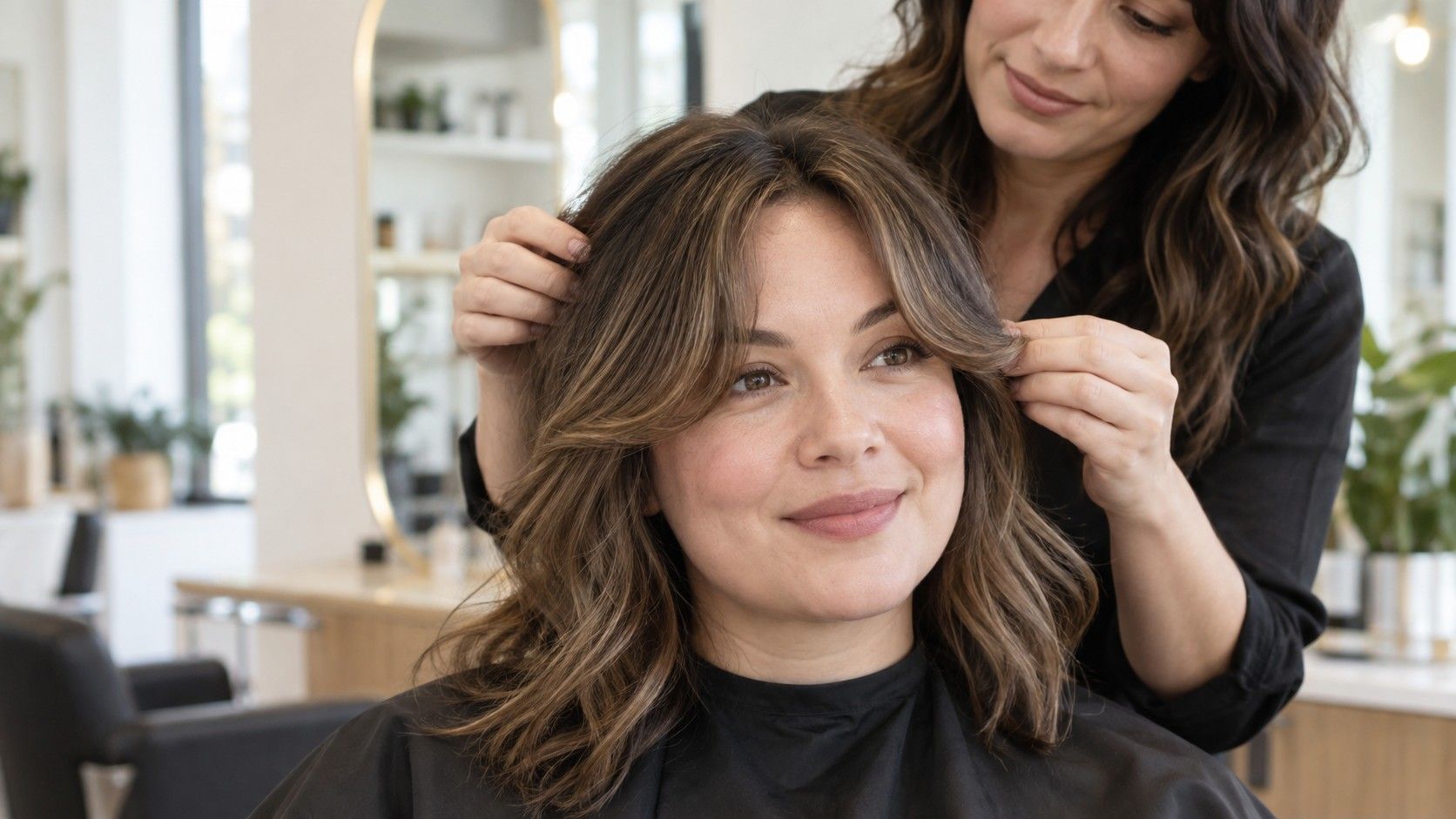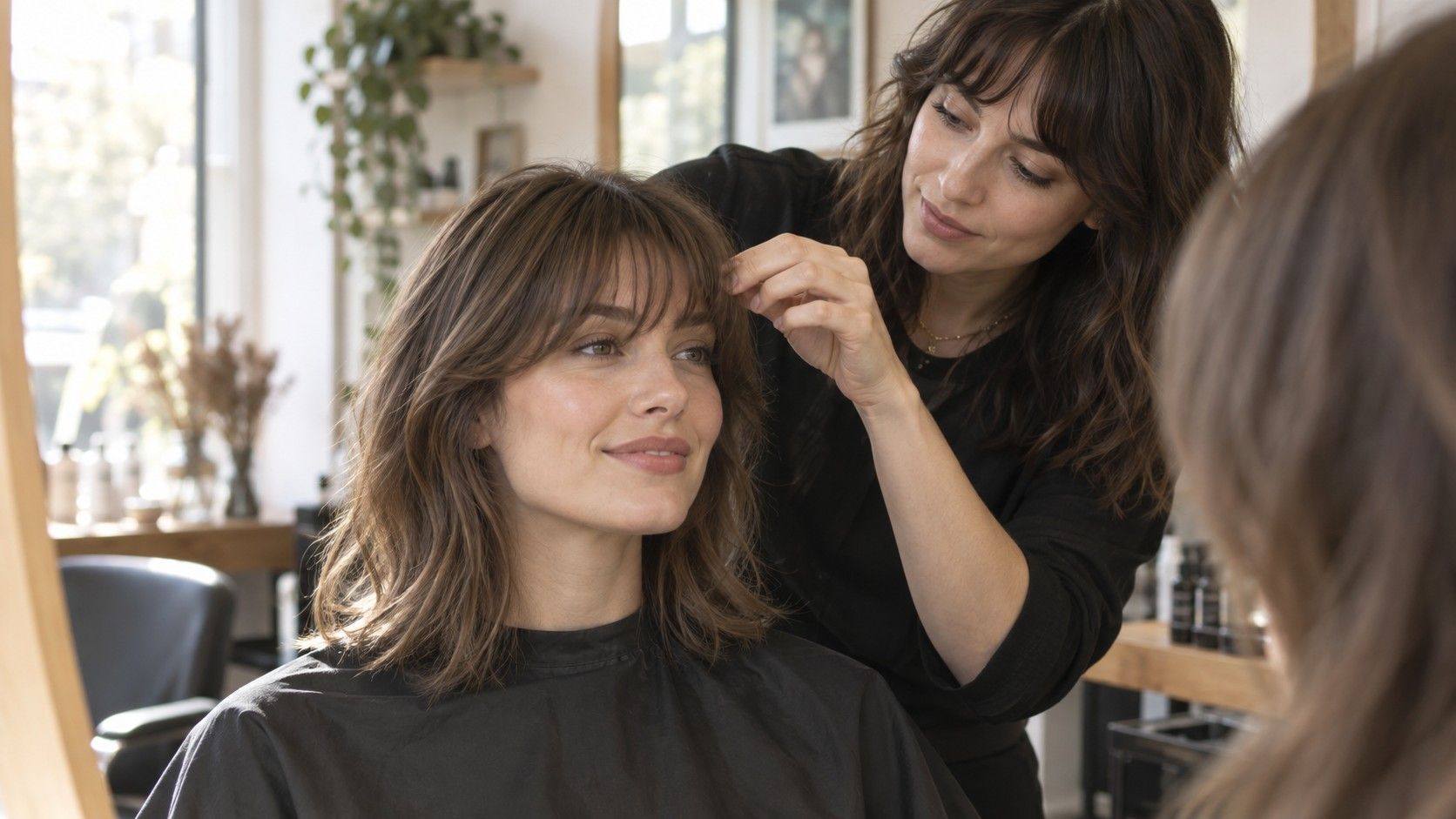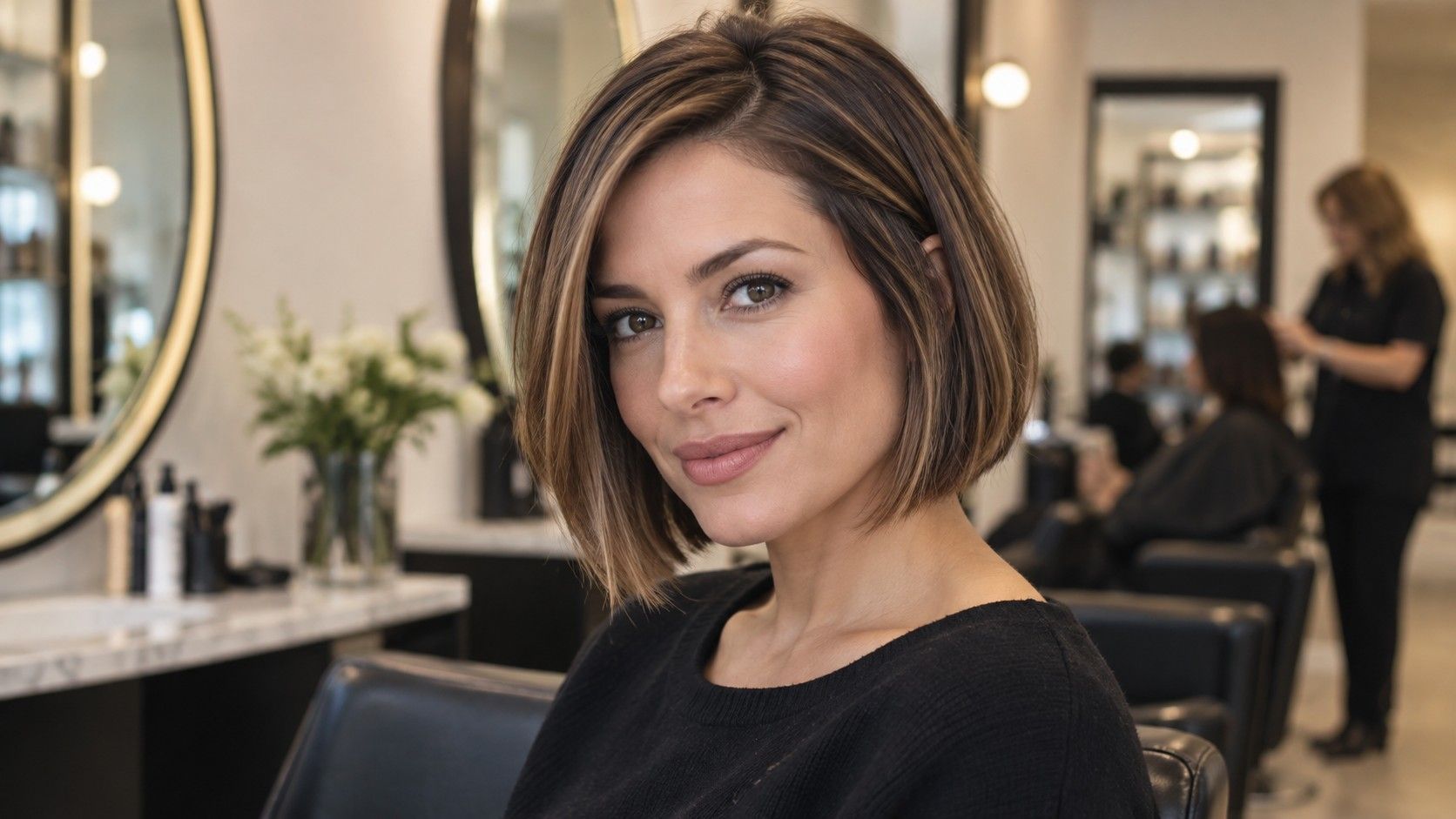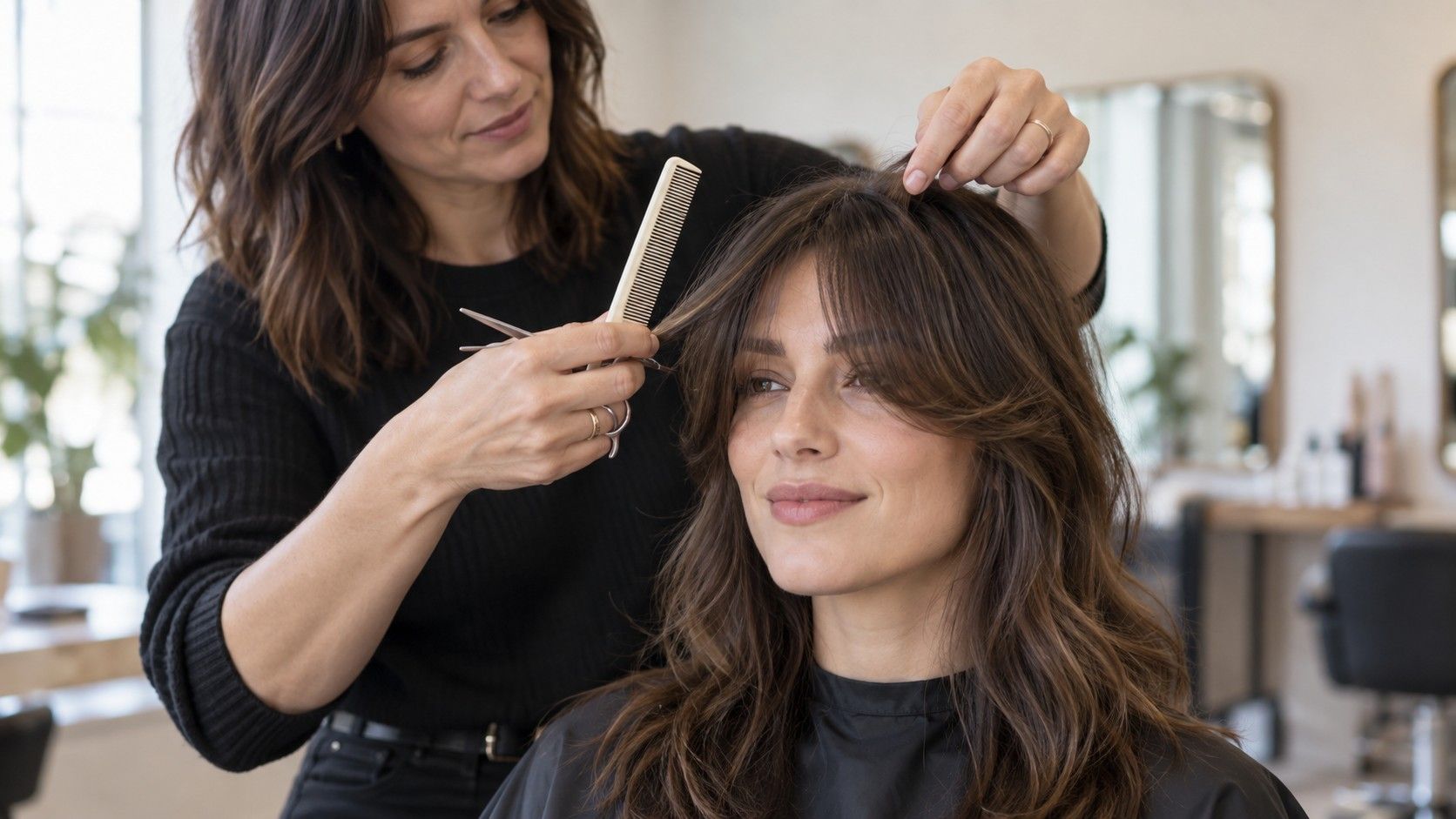
The names for bang types can make a salon consultation sound more certain than it really is. “Curtain,” “wispy,” “bottleneck,” and “micro” describe useful visual ideas, but they do not replace a look at your hairline, density, and morning routine. Two people can ask for the same fringe and leave with quite different, equally successful cuts. The trick is to use the names as a starting point, then explain where you want the fringe to sit, how much forehead you want to show, and how often you are prepared to style it.
Compare bang options by shape, not by the trend label
A fringe has four decisions hiding inside it: length, width, density, and direction. Length is obvious, from a cropped micro fringe to cheekbone-skimming pieces. Width is how far across the forehead the section travels; a narrow section leaves the temples open, while a broad one reaches toward the outer brows. Density is the amount of hair borrowed from the front. Direction is whether the hair falls down, to one side, or splits around a centre part.
Those choices explain why a full fringe can look dramatic without being short, and why a wispy fringe can look light despite covering the brow. Before using any name, look in the mirror with your hair pulled back and mark the practical zone: do you want to see the eyebrows, cover a forehead line, soften the temples, or simply make a ponytail less severe? A reference photo is useful only if its hair texture and parting resemble yours. Copying a fringe from thick, straight hair onto fine waves without changing the plan is rarely kind to either person.
It also pays to identify the commitment. A cut that touches the lashes asks for more trimming than a cheekbone-length piece. A full fringe needs a dry shampoo and a quick reset after exercise; a long side-swept section may live happily in a clip for days. Good bang styles are not the styles that photograph best. They are the ones whose maintenance fits the way you actually leave the house.
Curtain bangs and bottleneck bangs solve the centre-part question
Curtain bangs part in the middle or slightly off-centre and sweep away from the face. Their shortest point usually sits near the brow, eye, or upper cheek, then lengthens toward the cheekbones. The opening can make a centre part feel softer, especially when it leads into face-framing layers. They are not automatically low maintenance: the roots can flatten overnight, and a strong cowlick may force the split somewhere you did not choose.
Bottleneck bangs are a close relative, usually narrower at the brow and wider through the cheek area, much like the outline of a bottle. They keep more forehead visible at the centre and blend outward into longer pieces. This shape can be a good bridge for someone growing out a blunt fringe, because the outer sections have a purpose instead of simply looking late for a trim. On a blunt bob, though, it needs a careful connection to avoid a noticeable ledge at the cheeks.
Both styles benefit from a simple test while damp: dry the fringe forward first, then sweep it away from the face. If it only works after an elaborate round-brush routine, choose a longer inner point or less density. The haircut should cooperate with the natural split rather than asking you to fight it every morning.
Full, wispy, and micro fringes are different levels of coverage
A full fringe is a broad, dense panel that falls across much of the forehead. It can be blunt at the lower edge or softly textured, but the defining feature is coverage. It makes a strong frame for the eyes and works well when the hairline is fairly even. The cost is visibility: oils, humidity, a workout, and a wool hat all show up quickly in a dense fringe. Plan on small trims every few weeks if the lashes are your boundary.
Wispy bangs use less density and usually have separated, feathered ends. They are appealing when someone wants to test a fringe without a heavy block of hair across the forehead. Fine hair often benefits from restraint, yet a wispy fringe can become too see-through if the section is taken from too far back or cut too aggressively. “Wispy” should still mean intentional strands, not a few lonely pieces that vanish by noon.
Micro bangs sit well above the brows, sometimes only a few centimetres down from the hairline. They make a clear graphic statement and expose the brow area, so they do not function like a small corrective detail. Texture, forehead height, and personal taste all matter more than a face-shape rule here. A micro fringe is also unforgiving of a rushed home trim: with no spare length, one uneven snip becomes the whole conversation.
| Bang type | What it usually means | Daily effort | Useful first check |
|---|---|---|---|
| Curtain | Centre opening with longer outer pieces | Medium | Does the natural part sit where you want it? |
| Bottleneck | Narrower brow section widening at the cheeks | Medium | Will it blend into the first face layer? |
| Full fringe | Broad, dense coverage across the forehead | High | Can you reset it after heat or exercise? |
| Wispy | Light density and soft, separated ends | Low to medium | Is there enough hair to remain visible? |
| Micro | Short fringe above the brows | High | Are you comfortable with frequent dry trims? |
| Side-swept | Fringe directed across the forehead | Low to medium | Does the growth pattern already favor that side? |
Side-swept bangs are practical when the hair wants a direction
Side-swept bangs travel diagonally across the forehead and usually blend into one side of the haircut. They can be short near one brow and lengthen toward the cheek or jaw, depending on how dramatic you want the line. This is often a sensible choice for a pronounced cowlick because it works with a natural directional push rather than dividing it down the middle. It can also be easier to tuck away when you need a completely clear face.
The risk is letting it become a vague, heavy side layer. A true side-swept fringe still needs a visible starting point and an intentional angle. Ask the stylist to show you how it lands with the part you wear most often, then flip your part once. If the entire shape collapses when you move a centimetre, it may be too dependent on a salon blow-dry.
On straight hair, the diagonal line is easy to see, so soft ends matter. On wavy hair, it can look relaxed and forgiving, but length must be checked dry because the wave will pull one side upward. Glasses also change the equation: a side fringe that lands directly on a frame hinge can separate or bend in a way it never did during the consultation.
Density and width decide whether the fringe feels light or overwhelming
Many disappointing bangs are not the wrong named style; they are the wrong amount of hair. Taking a deep triangular section creates a fuller fringe, but it also removes density from the front of the haircut and can make the roots look sparse behind it. A shallow section gives a light result, although it may not have enough substance to hold a curve. The right starting point depends on hair thickness, hairline, and whether you wear the rest of the hair loose or pulled back.
Width changes proportions without changing length. A narrow fringe ending around the inner or outer brow leaves the temples exposed and can feel airy. A broad fringe reaching toward the temples has more presence and can connect well with a bob, but it needs to be balanced with the cheek area. If the widest point stops abruptly over the upper cheeks, the face can look boxed in. Soft graduation at the corners is a small technical detail that has a big visual effect.
Bring this up before the scissors come out. Ask how much hair will be taken from the front, and look at the section in the mirror. It is far easier to add a little density later than to grow back a too-deep triangle. This is especially true if you have fine hair or a part that already exposes the scalp at the crown.
Pick a fringe by styling tolerance, then make the request specific
If you can spare two minutes with a dryer, most curtain, bottleneck, and side-swept shapes are realistic. Wet only the fringe, dry it forward to remove sleep creases, then direct it into place. If you avoid heat completely, choose longer, softer pieces that can blend into layers when they do not behave. A full or micro fringe may still suit you, but it is worth accepting the trim schedule before committing.
At the appointment, trade the vague phrase “I want bangs” for a practical sentence: “I want to see my brows, keep the temples open, and be able to tuck the sides back,” or “I want a dense fringe that sits above my lashes, but no hard line at the corners.” Mention your natural part, any cowlick, how your hair dries, and whether you wear it up for work. These details do more for the result than a list of bang types and names.
Finally, ask for the fringe to be checked dry in your normal part. A fringe cut wet can rise, split, or widen once the hair returns to its natural texture. The most convincing bang options feel like a part of the haircut on day twenty, not a separate accessory that only behaves for the photograph taken at the salon.