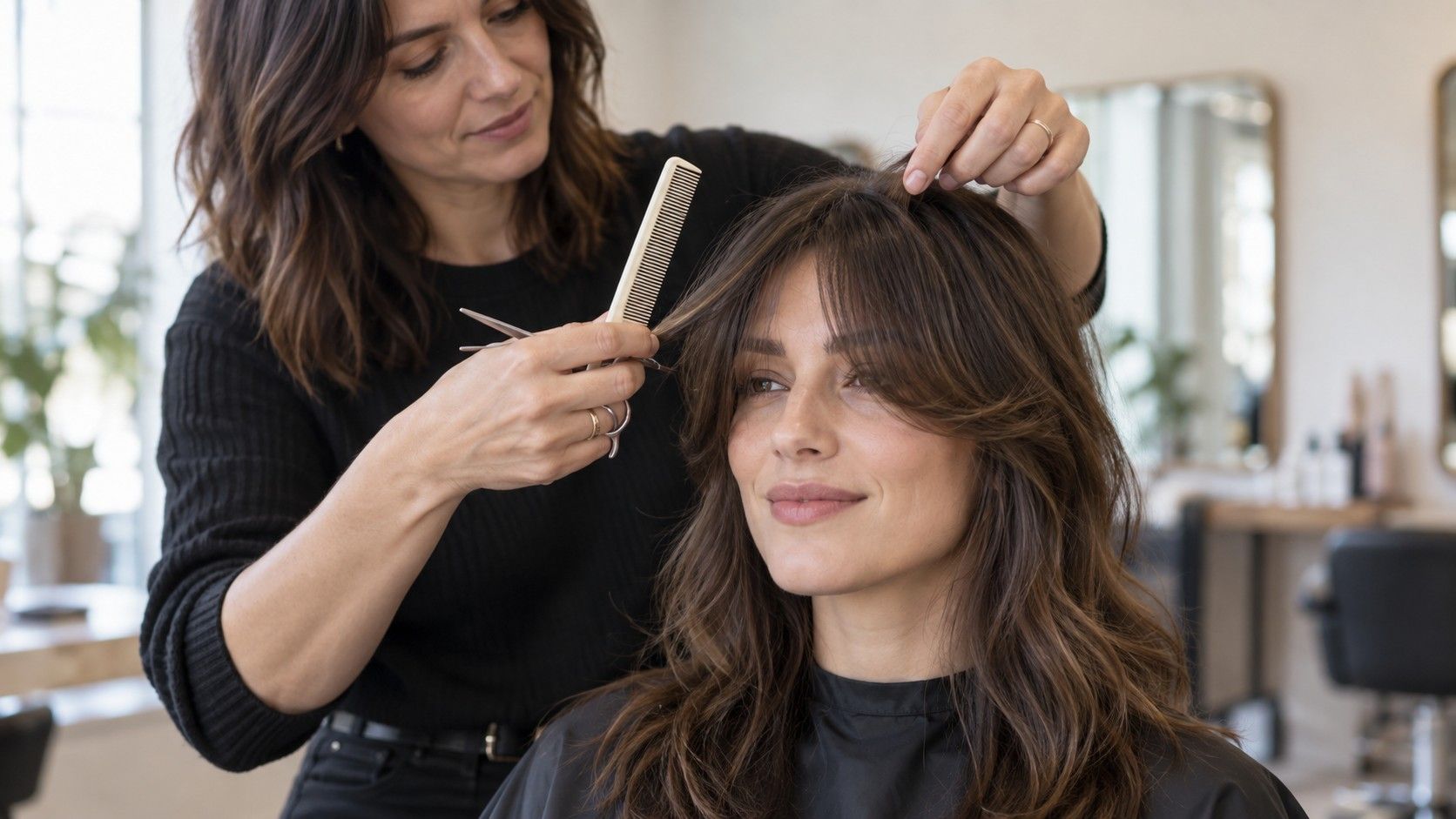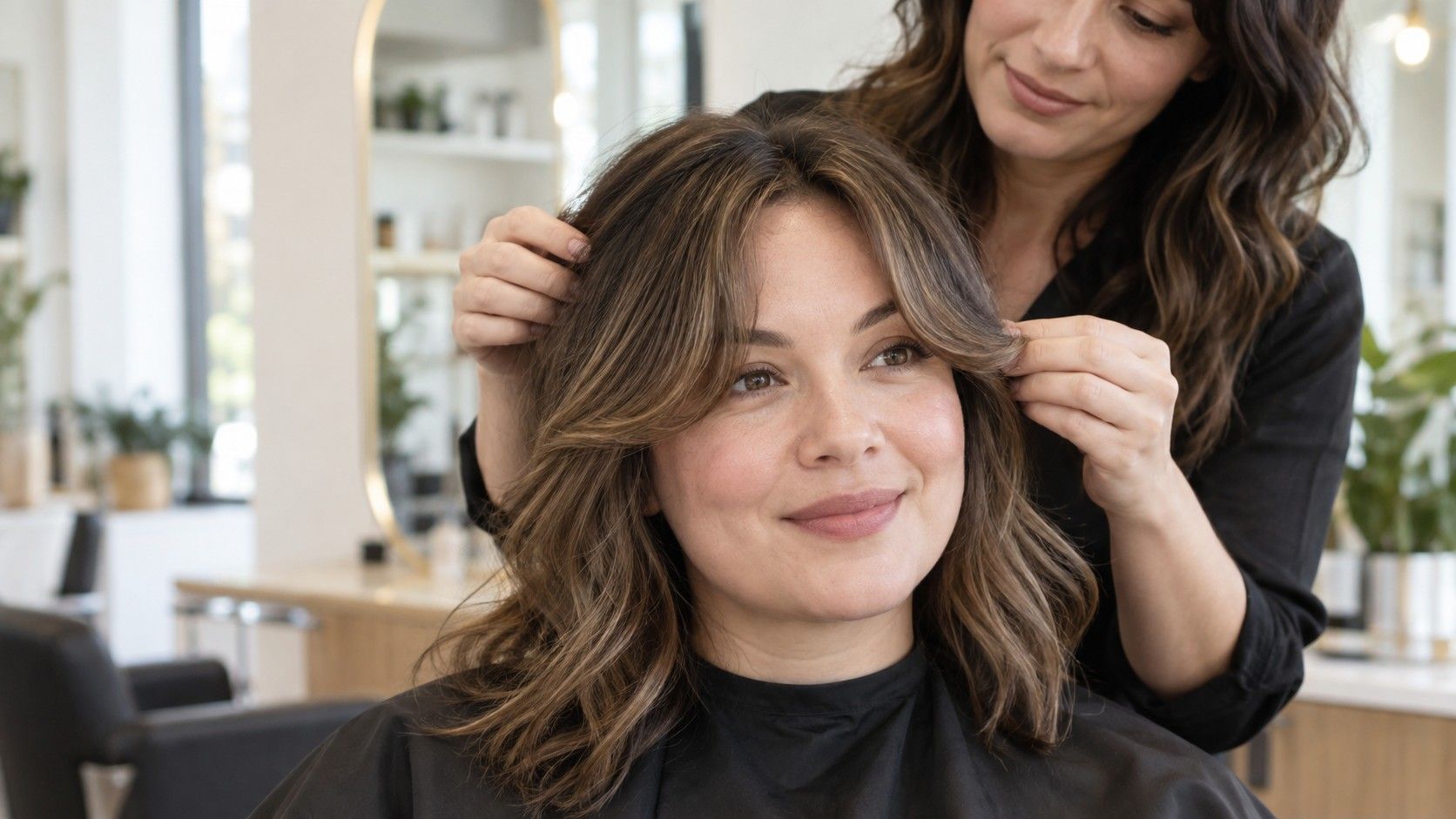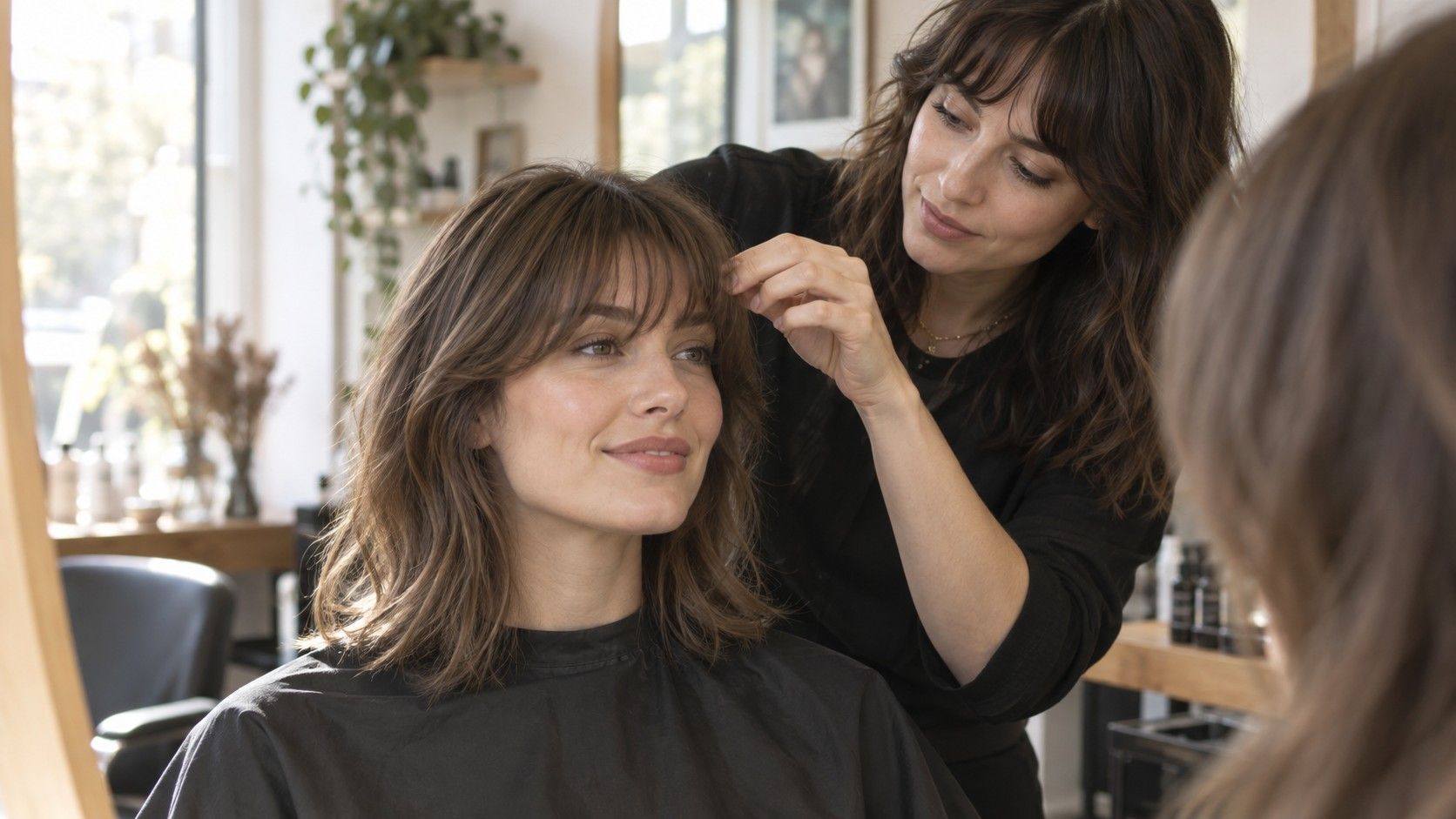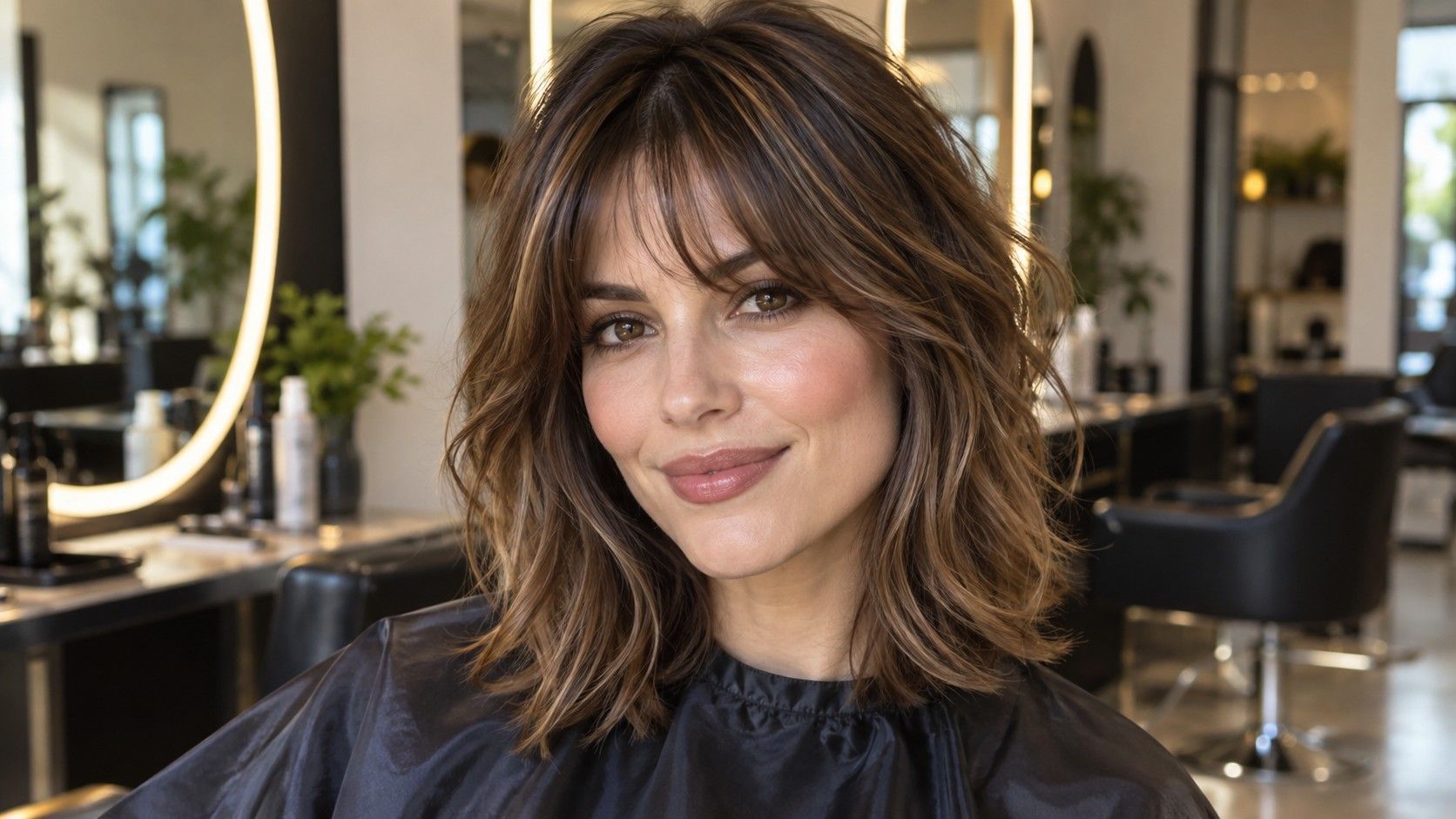
A heart-shaped face usually has a broader forehead or cheekbone area and a narrower chin, but that description leaves out the details that make a haircut work in real life. Hair density, a cowlick near the part, glasses, and the amount of time you spend styling all matter. The useful aim is not to disguise the face. It is to decide whether you want softness around the forehead, a little fullness near the chin, or a cleaner, more graphic outline.
Read your proportions before choosing a length
Pull your hair back and look at the outline in daylight rather than from six inches away in a bathroom mirror. Notice whether the widest point is the forehead, the cheekbones, or both. Then look at the chin: it may be gently tapered, prominent, or small relative to the upper face. Two people can both be described as heart-shaped and need very different cuts.
The word balance is more helpful than correction. If the upper face feels broad to you, a little movement beside the temples or around the jaw can distribute attention. If you like your forehead and cheekbones, a close crop or centre part may show them off. There is no banned hairstyle here; there are only choices that create a different frame.
Hair texture changes the outline quickly. Fine straight hair tends to sit close to the face, so a solid perimeter can look fuller. Dense waves build width on their own, especially between the cheekbones and ears. Before committing to a photo, ask whether it shows hair with a similar texture and whether it was styled into that shape for an hour of photography or can survive an ordinary day.
Compare lengths by where the ends land
A chin-length bob can add presence around a narrow lower face, particularly when the ends have a little bend rather than forming a hard shelf. It is a good option if you want a visible shape and are happy to maintain it. A blunt version puts all the focus on the jaw; a softer version with longer front pieces moves the eye down more gradually.
A neck-length cut or a collarbone lob is often easier to live with. It gives the lower half of the face some weight without needing a perfect blow-dry every morning. A lob can be tucked behind one ear, worn with a side part, or loosely waved, so you get several outlines from one cut. That flexibility is useful if you are unsure whether you prefer volume near the jaw or a quieter shape.
Very long hair can suit a heart-shaped face too, but its layers need a plan. Long, heavy, straight lengths with no movement can draw the eye downward and make the upper face seem more dominant. Face-framing layers beginning below the cheekbone, or waves that open around the jaw, usually keep the silhouette connected. Avoid cutting the shortest layer exactly at the widest cheekbone unless you specifically want added width there.
| Length | Useful effect | Practical check |
|---|---|---|
| Chin-length bob | Brings visual weight near a tapered chin | Needs trims before the nape loses shape |
| Neck-length bob | Softens the transition from cheek to jaw | May flip at the ends on straight hair |
| Collarbone lob | Offers balance with easy tuck-behind-ear options | Can look flat if roots are not lifted |
| Long layers | Keeps length while adding movement below the cheeks | Ask where the first layer will start |
Bangs should soften the forehead, not close it off
Curtain bangs are popular for good reason: their centre gives some coverage while their longer edges keep the face open. On a heart-shaped face, the shortest point can sit near the brow and extend toward the cheekbones. The result is softer at the forehead without creating a thick horizontal line across it. They are also forgiving if you decide to grow them out.
A side fringe gives a diagonal line, which can be useful when a centre part makes the top of the face feel too symmetrical. It works best when it follows the natural part rather than fighting a crown cowlick. Have the stylist dry the fringe in its natural direction before taking off length; wet hair hides the bend that will reappear the next morning.
Heavy blunt bangs can look striking, but they are a higher-maintenance choice. They may crowd the brow area if you wear glasses, and their straight edge makes the upper face more of a focal point. If you like the idea, ask for a softer perimeter and longer outer corners first. A few millimetres can be removed later; a fringe cut too short has to be lived with.
Put volume where it supports the shape
Volume is not simply good or bad. At the crown, a modest lift can stop the hairstyle from sitting like a triangle. At the temples, a lot of outward volume can make the upper face look wider. Near the jaw and collarbone, soft width can make a tapered chin feel more balanced. The placement matters more than the amount.
For fine hair, try a side or off-centre part and dry the roots in the opposite direction for a minute before setting the final part. This creates lift without piling product into the lengths. For thick hair, ask about internal weight removal instead of relying on many short layers. Too much layering can make the sides expand precisely where you wanted them calmer.
Waves are often more flattering when they begin below the cheekbone. Use a medium barrel or a flat iron bend and leave the final inch of the ends straighter. That keeps the movement relaxed rather than round and puffy. If you air-dry, choose a cut that already has room for your natural texture; styling tutorials cannot alter the direction your hair takes after sleep and humidity.
Parting and colour are small decisions with visible results
A centre part can look clean and modern on a heart-shaped face, especially with a lob or long layers that frame the chin. If it makes the forehead feel exposed, shift it slightly off centre instead of jumping straight to a dramatic side sweep. An off-centre part preserves symmetry while taking the sharpness out of the top section.
Colour will not change face shape, but it can change how strongly you see the haircut. A solid, dark colour makes a blunt perimeter obvious. Soft dimensional colour can make waves and layers more visible, which helps a longer cut look intentional. Bring this up after choosing the length and part. A good colour plan supports the cut rather than becoming a distraction from a shape you do not like.
Check the cut with the accessories you wear most. Glasses can affect where a fringe needs to fall; large earrings can make a tucked side feel more deliberate; a work headset may flatten volume at the crown. These are ordinary details, but they decide whether a style works outside a salon chair.
Make the consultation specific enough to prevent surprises
Bring one image for length, one for texture, and one that shows a fringe or part you like. A single reference often contains three separate decisions, and the stylist cannot know which one caught your eye. Mention how often you wash, whether you heat-style, and how long you usually go between appointments. A chin bob and a long layered cut have very different trim cycles.
Ask where the proposed layers will start, how the hair will sit around the chin when air-dried, and what the grow-out will look like after two months. If you are torn between two lengths, start longer. The best haircut for a heart-shaped face is not a formula; it is a shape that keeps its balance once the salon blowout is gone and still fits your actual mornings.