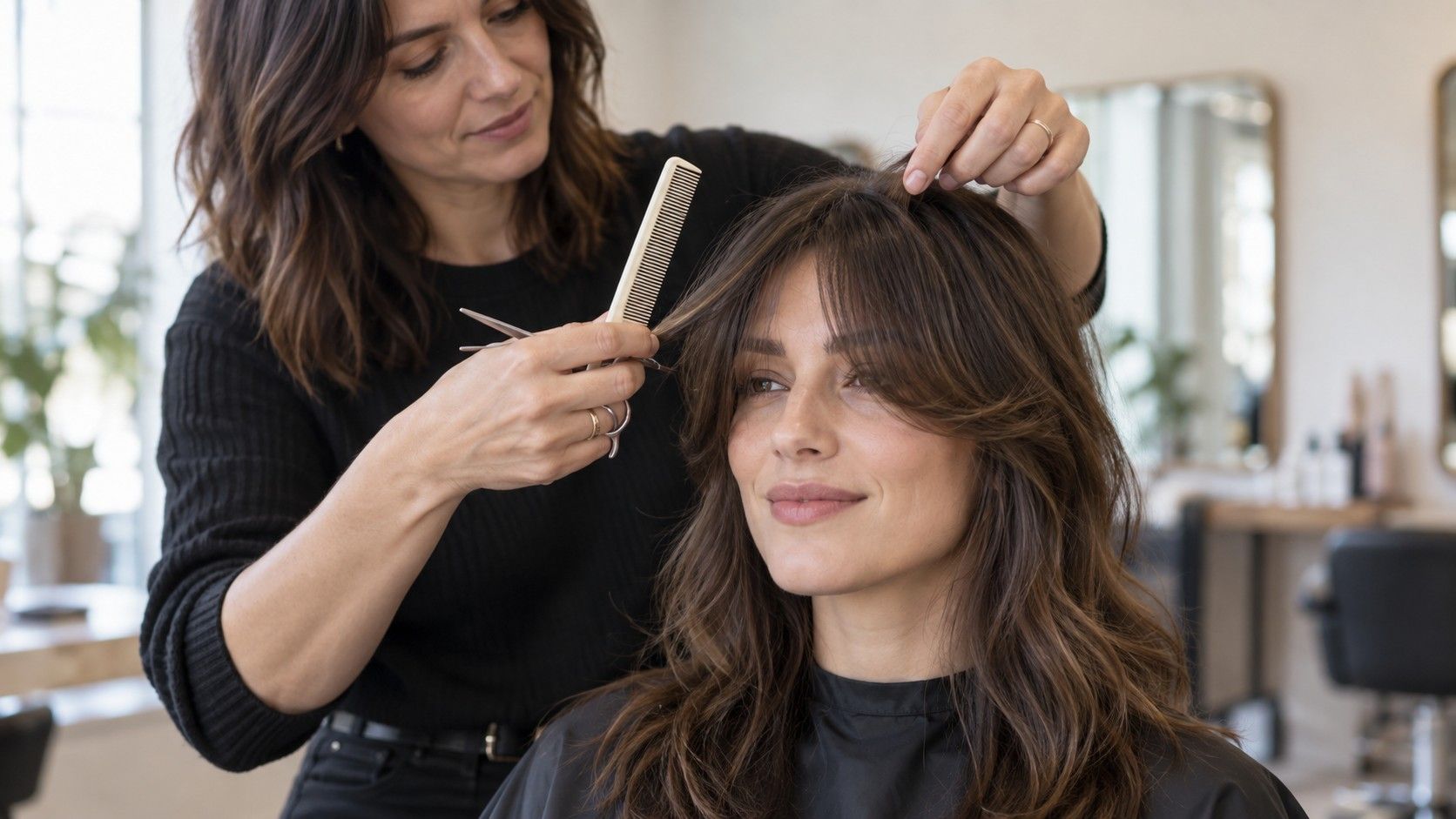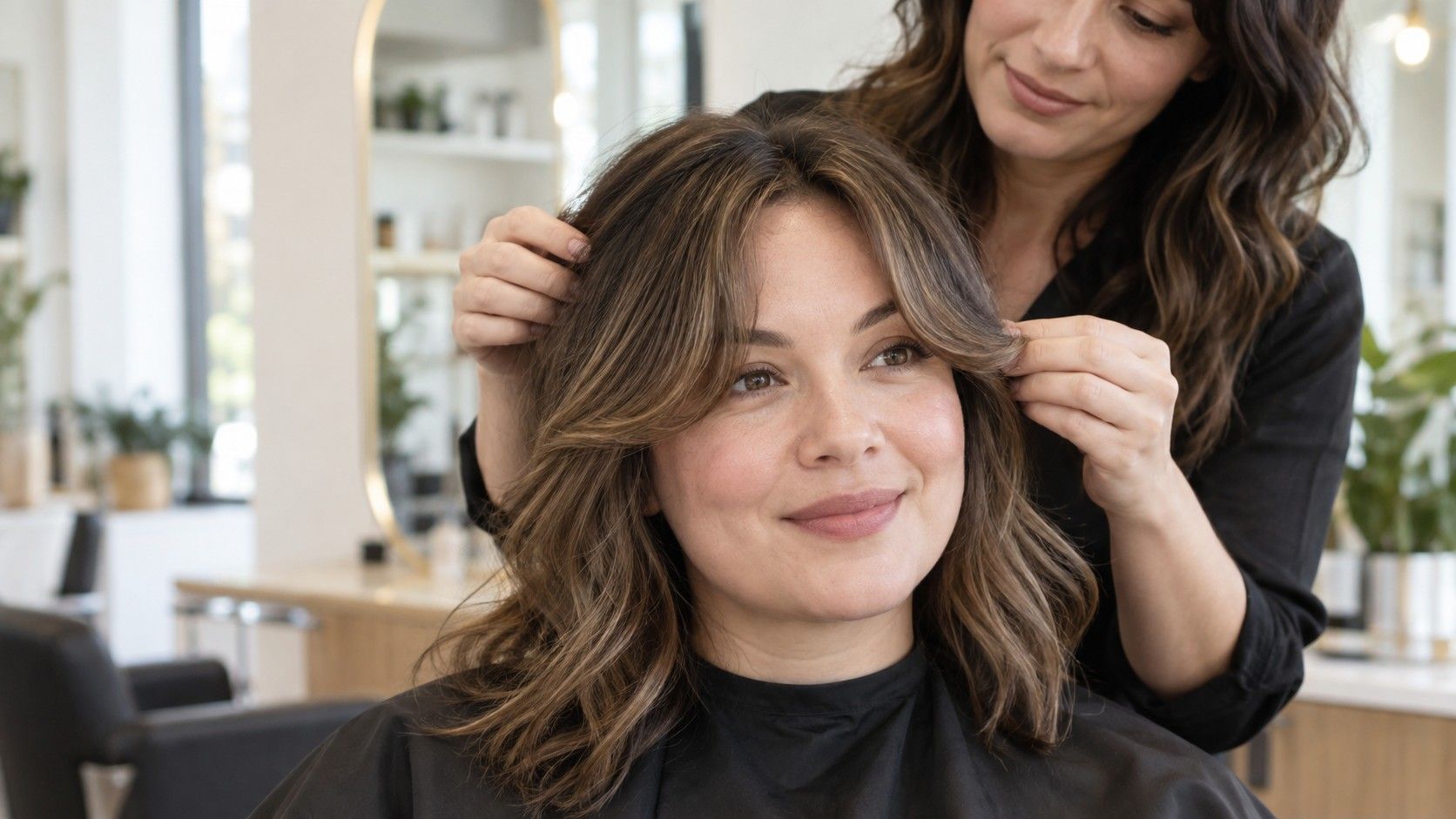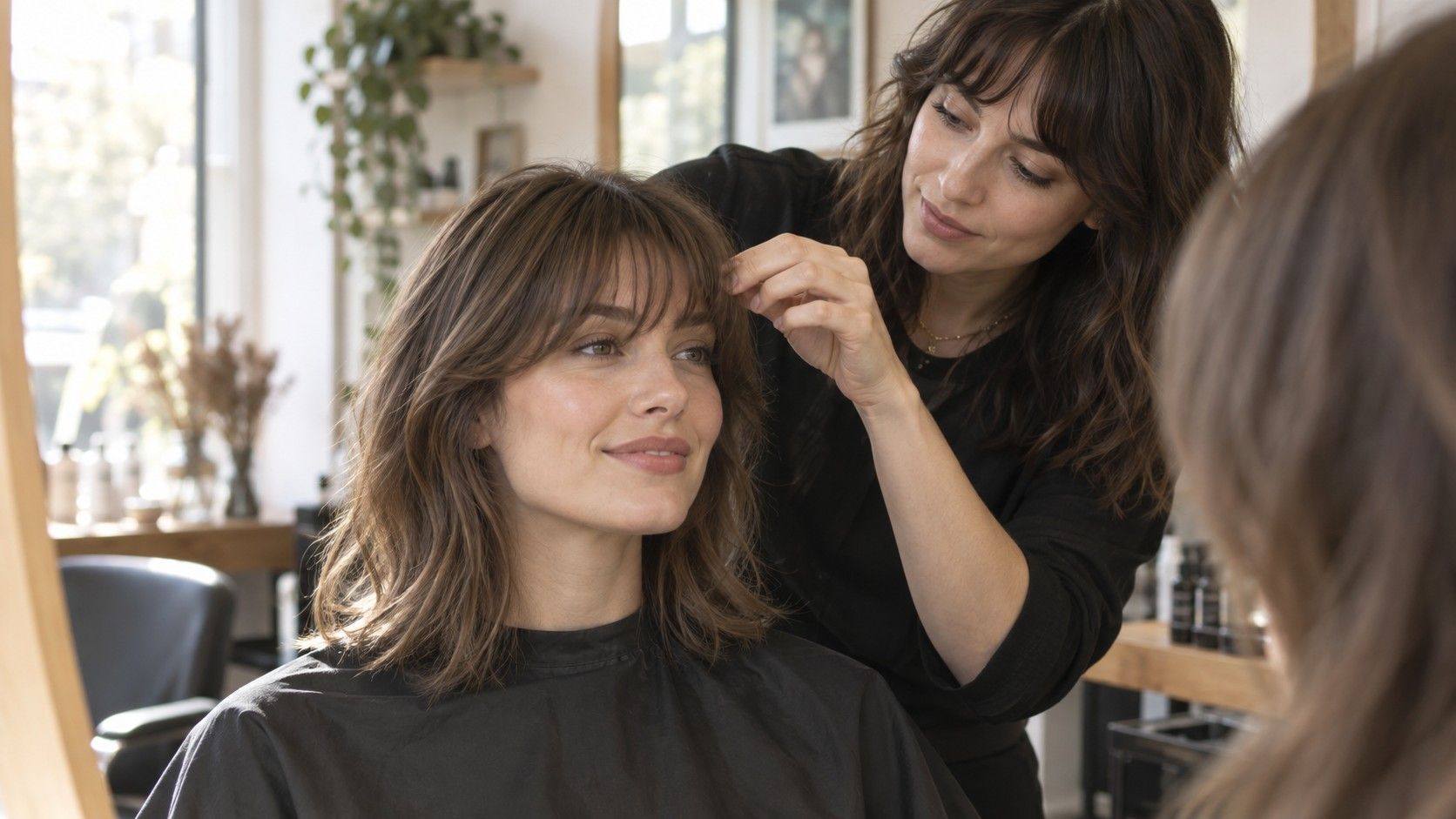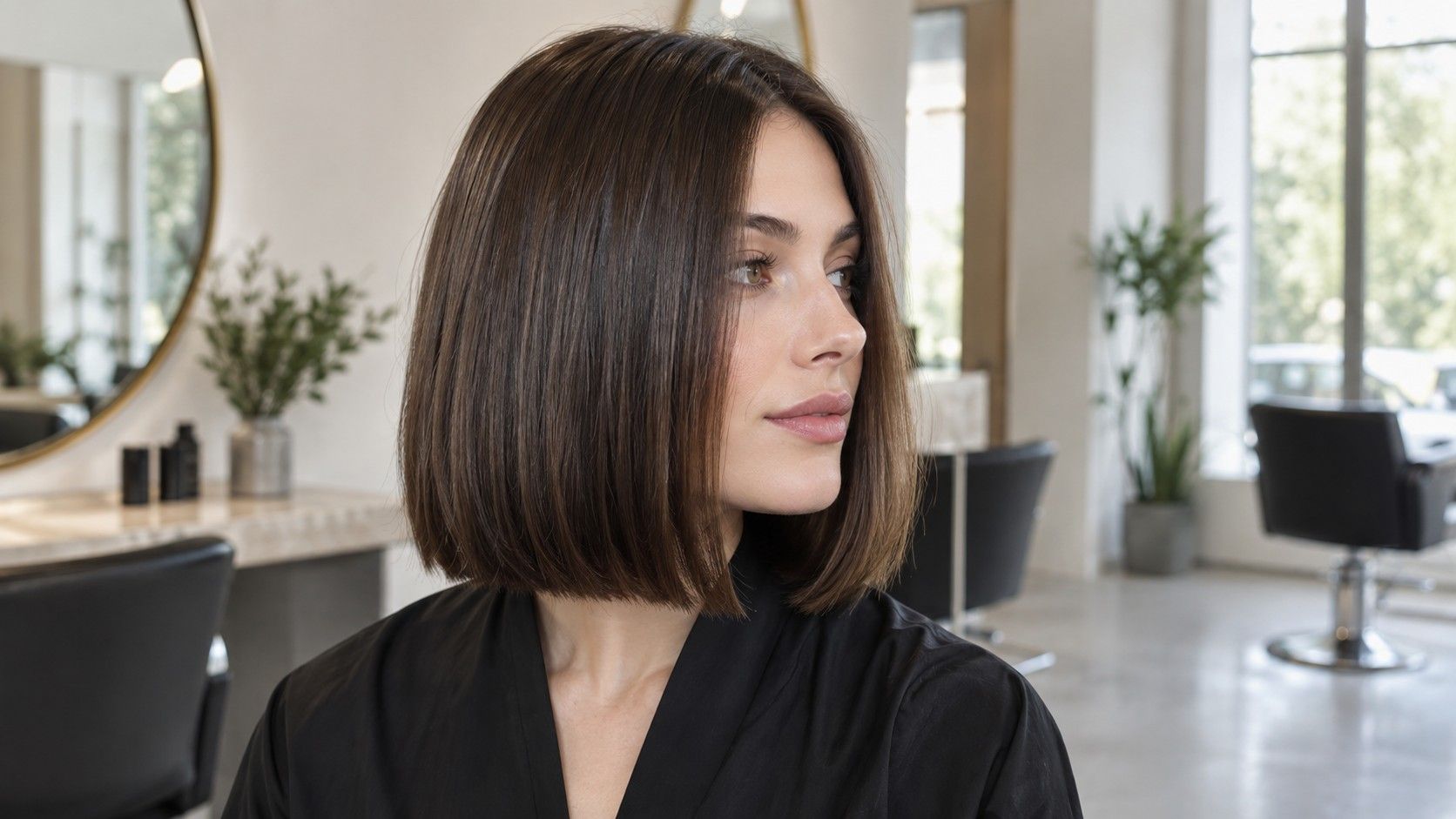
Straight hair makes a haircut look honest. It does not hide a heavy line, an uneven layer, or a parting that has been ignored during the appointment. That can sound unforgiving, yet it is also useful: with the right outline and a realistic plan for your roots and ends, straight hair can look deliberate on an ordinary weekday without being curled into someone else's texture.
Notice what straight hair reveals before choosing a photo
On smooth hair, the perimeter is always visible. A blunt line shows density and polish, but it also makes split or sparse ends easier to spot. Layers show clearly too. A few well-placed pieces can create movement; too many can turn fine straight hair into disconnected wisps. Before deciding on a cut, look at your hair in a window rather than only under bathroom lighting. That is where you can see whether the ends are genuinely full.
Roots are the other practical issue. Straight hair often lies close to the scalp, particularly around a center part. This is not a flaw to solve with a dramatic haircut. It is a useful condition to mention. If you dislike using dry shampoo, lifting spray, or a round brush, a cut that depends on constant crown volume may be a poor bargain, even if the reference photo is excellent.
Pay attention to the direction your hair naturally falls. A stubborn side part, a double crown, or a front section that flips outward will announce itself much sooner in straight hair than in a loose wave. A stylist should check these patterns before setting the baseline. It is much easier to make a minor adjustment to the length than to discover after shampooing that the front insists on separating in the opposite direction.
Decide whether you need a strong perimeter or softer movement
A one-length or near one-length cut is often the best cut for straight hair when the goal is fuller-looking ends. The clean bottom line gives fine or medium density more presence and can make a simple blow-dry look expensive without much effort. It works especially well from a sharp chin-length bob through a shoulder-grazing lob and on longer hair that has enough density to keep a solid edge.
Subtle long layers suit hair that feels heavy or hangs too flat through the middle. The word subtle matters. Long layers should create a difference in how the hair moves, not a staircase you can identify from across the room. Ask where the shortest layer will land when dry and whether the stylist intends to keep the bottom perimeter dense. Those two details reveal more than a vague request for “texture.”
There is a middle option: retain a blunt outer line while removing a little hidden weight or adding soft face framing. This keeps the ends substantial but stops the haircut from behaving like a single curtain. It is particularly useful for thick straight hair, where a fully blunt long cut can feel blocky, and for medium density hair that needs movement without sacrificing every bit of fullness.
| Your practical concern | Often useful direction | Check before agreeing |
|---|---|---|
| Fine ends look thin | Blunt or softly rounded perimeter | How much length must come off to remove damage |
| Thick hair feels heavy | Long internal layers or restrained weight removal | Whether the ends will still look solid |
| Roots go flat quickly | Shape that works with your normal part and modest crown lift | How much daily blow-drying is expected |
| Hair flips at the shoulder | Move the line slightly above or below that point | Where the ends land when completely dry |
Pick bob, lob, or long hair by daily behavior
A blunt bob makes straight hair look graphic because the line remains visible from every angle. It is a good choice if you enjoy a precise shape and do not mind regular trims. The nape and the ends need attention as it grows, and a bob that hits the jaw can make a small bend or cowlick feel important. On the other hand, it can be easier to style than long hair because there is less length to smooth.
A lob is less strict. It still benefits from a clean perimeter, but it can tuck behind the ears, work with a clip, and transition into longer hair without a dramatic awkward stage. Shoulder length is not automatically easy, though. Straight ends often flip outward exactly where they hit a collar or shoulder. Ask to see where the cut lands while you sit normally, not just while your posture is salon-perfect.
Long straight hair has the advantage of versatility but can become visually flat when every section is the same length. Face-framing pieces beginning below the cheekbones, a gentle U-shape at the back, or very long layers can add direction without demanding heat styling. The caveat is damage: a long cut is only as persuasive as its last few inches. Keeping length at all costs can make the entire haircut look tired.
Add movement without quietly thinning out the ends
Texturizing is a word worth unpacking. On dense straight hair, selective internal removal can stop the sides from sitting like a shelf. On fine hair, aggressive thinning shears can create frizz, broken-looking ends, and a shape that goes limp after the first wash. Tell the stylist whether your hair has been thinned before and how it behaved. That history is more useful than a promise that you want “lots of movement.”
Face-framing layers are usually safer than scattering short layers throughout the head. They give the front a little lift and make a ponytail feel less severe, while the back can remain dense. A longer curtain shape around the cheek or jaw can be especially practical if you wear a center part. It should blend into the rest of the cut rather than form two isolated strips at the front.
For texture without loss of substance, consider the styling route first: a slight bend made with a flat iron, a small round brush at the ends, or a root clip while hair dries. These techniques add changeable movement. A permanent reduction in the ends is harder to reverse. The most useful haircuts for straight hair leave you choices on a rushed morning rather than requiring the same hot tool routine every day.
Test the parting and finish before you commit
Bring your everyday part to the consultation. A dramatic side part can make almost any straight cut look voluminous for a photo, but if you return to a center part every morning, the balance may change. Ask the stylist to look at both versions before the final refinement. This is particularly important with a blunt fringe, a short bob, or face-framing layers that have been cut to favor one side.
Also say how you normally dry your hair. Air-dried straight hair may show a slight bend, while a blow-dry can make it sleeker and flatter. If you normally let it dry on the train or in a hurry, ask to see the cut with minimal styling. A salon finish is pleasant, but it cannot be the only evidence that a haircut works.
Finally, leave room for a small adjustment after the first wash. Straight hair exposes tiny imbalances that may not appear until you recreate your usual routine. Most good cuts settle quickly, but a thoughtful check of the ends or front framing is more valuable than pretending the first mirror view tells the whole story. The goal is shape you can keep, not perfection frozen under salon lighting.
Maintain the shape instead of fighting it every morning
Regular light trims protect a clean perimeter, especially when hair is fine, bleached, or exposed to heat. The interval depends on the cut: a short bob needs attention sooner than long, soft layers. Rather than scheduling by a rigid calendar, watch for the signal that matters to you—the nape losing its line, the ends separating, or the face framing no longer landing where it should.
Use product sparingly near the roots. Straight hair can look overloaded quickly, and a heavy oil applied too high makes flat roots more obvious. A lightweight heat protectant, a little smoothing cream through the ends, and a dry shampoo used before—not after—the roots collapse are often enough. What matters is preserving the natural reflection of the hair, not making it stiff.
A good haircut should lower the amount of argument you have with your texture. If every day requires you to create waves, hide thinning ends, or force a part that never sits well, the answer may be a revised shape rather than another product. Straight hair is direct. Once the construction matches its density and fall, that directness becomes its best feature.