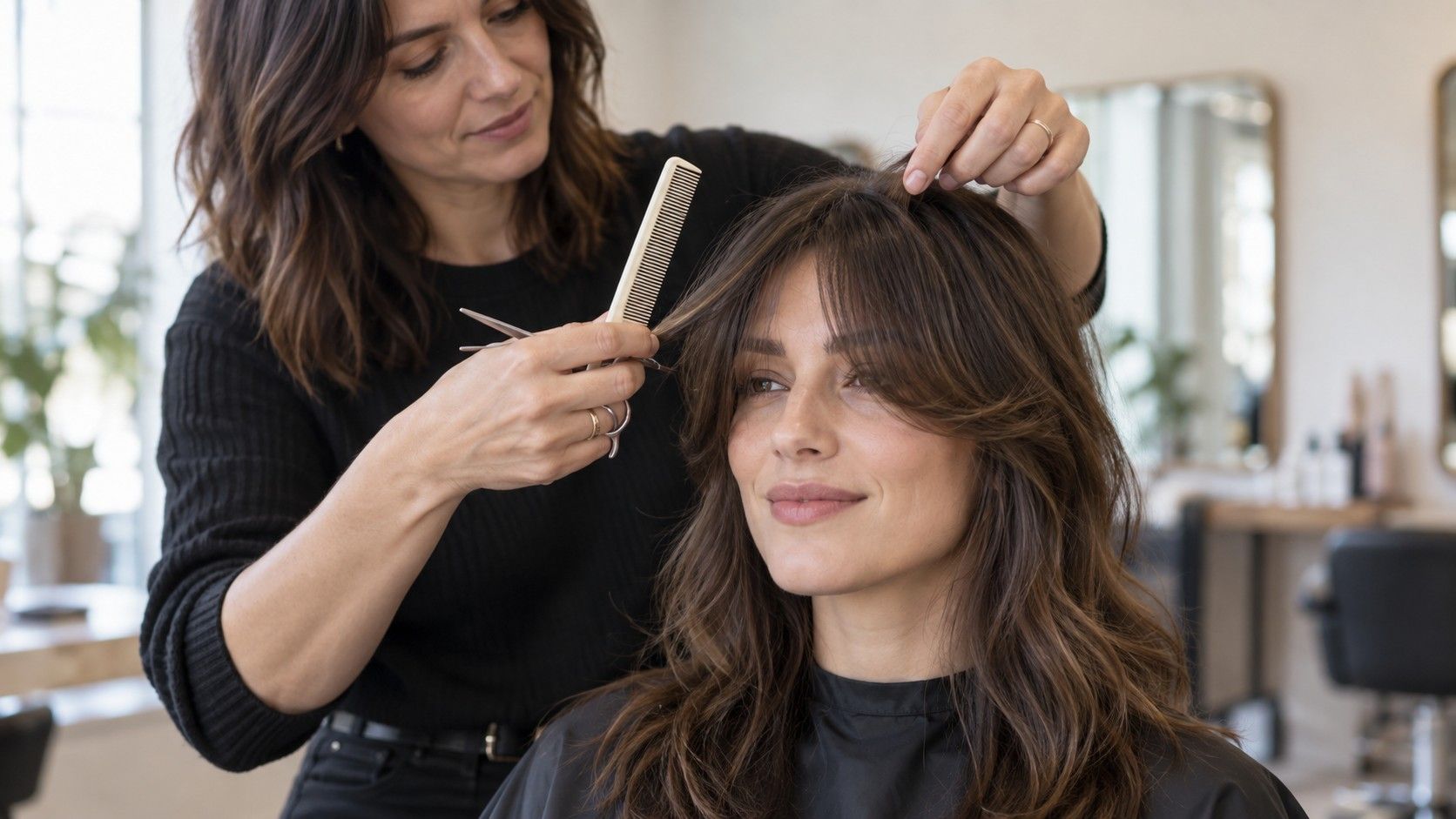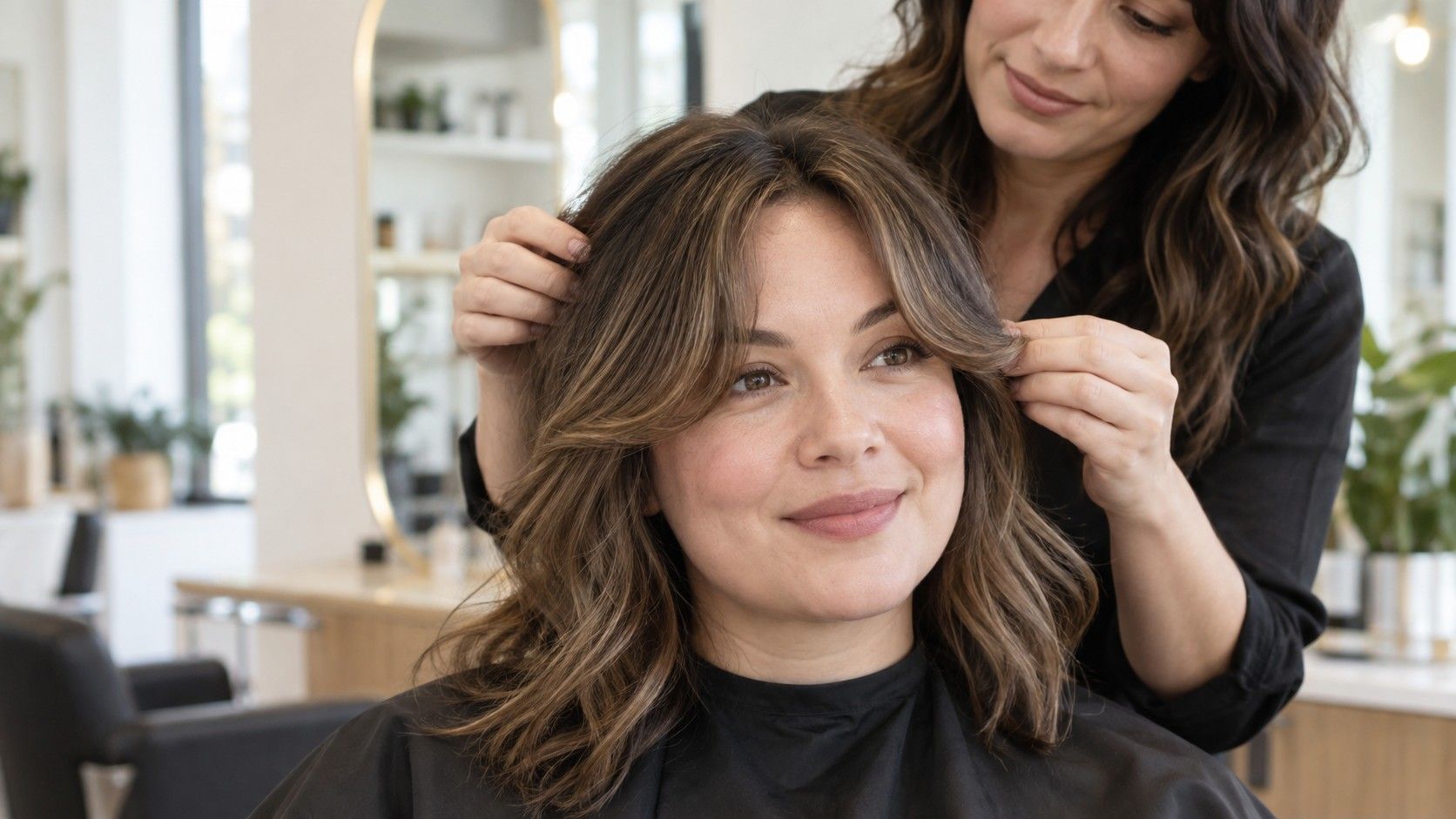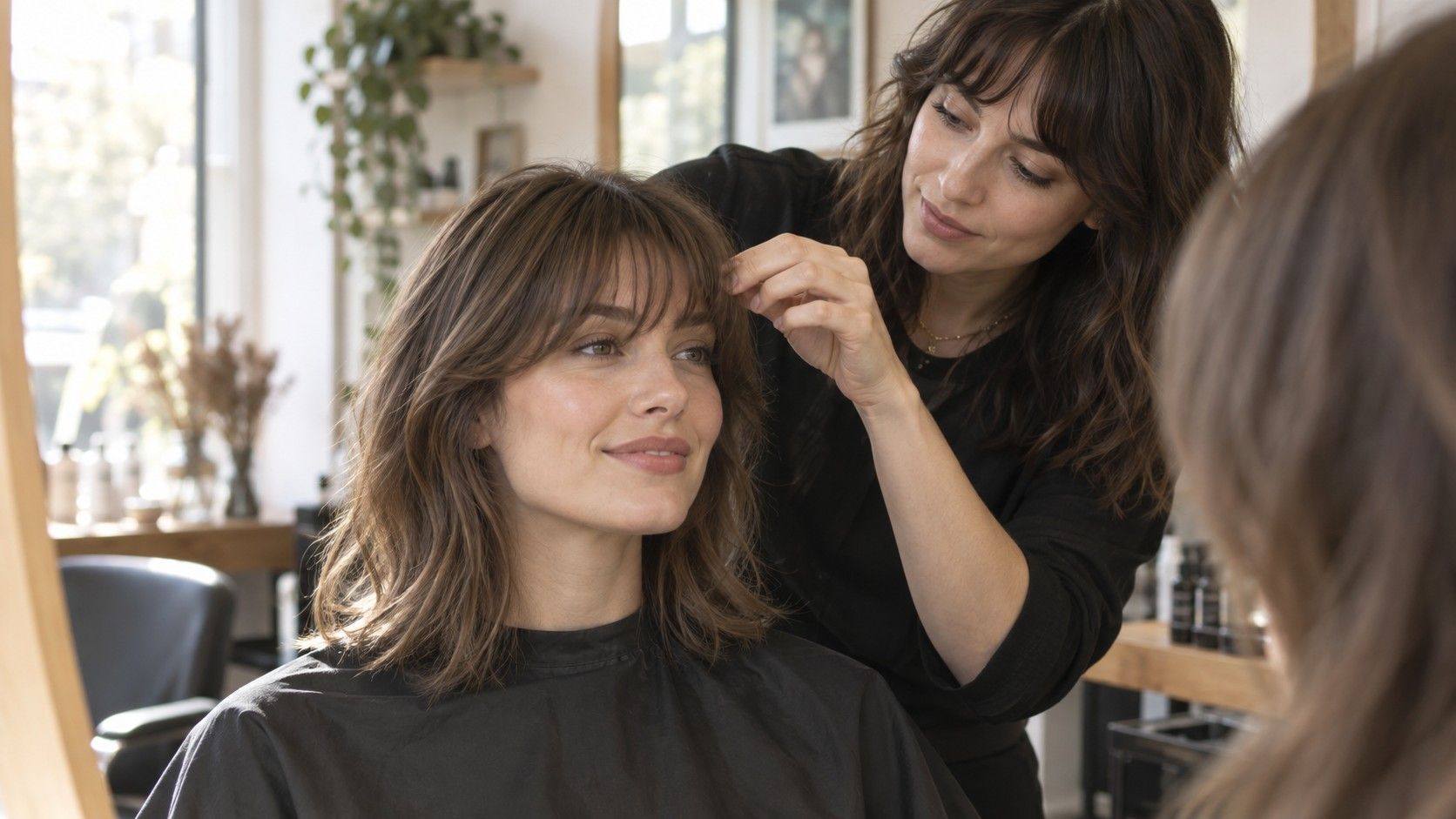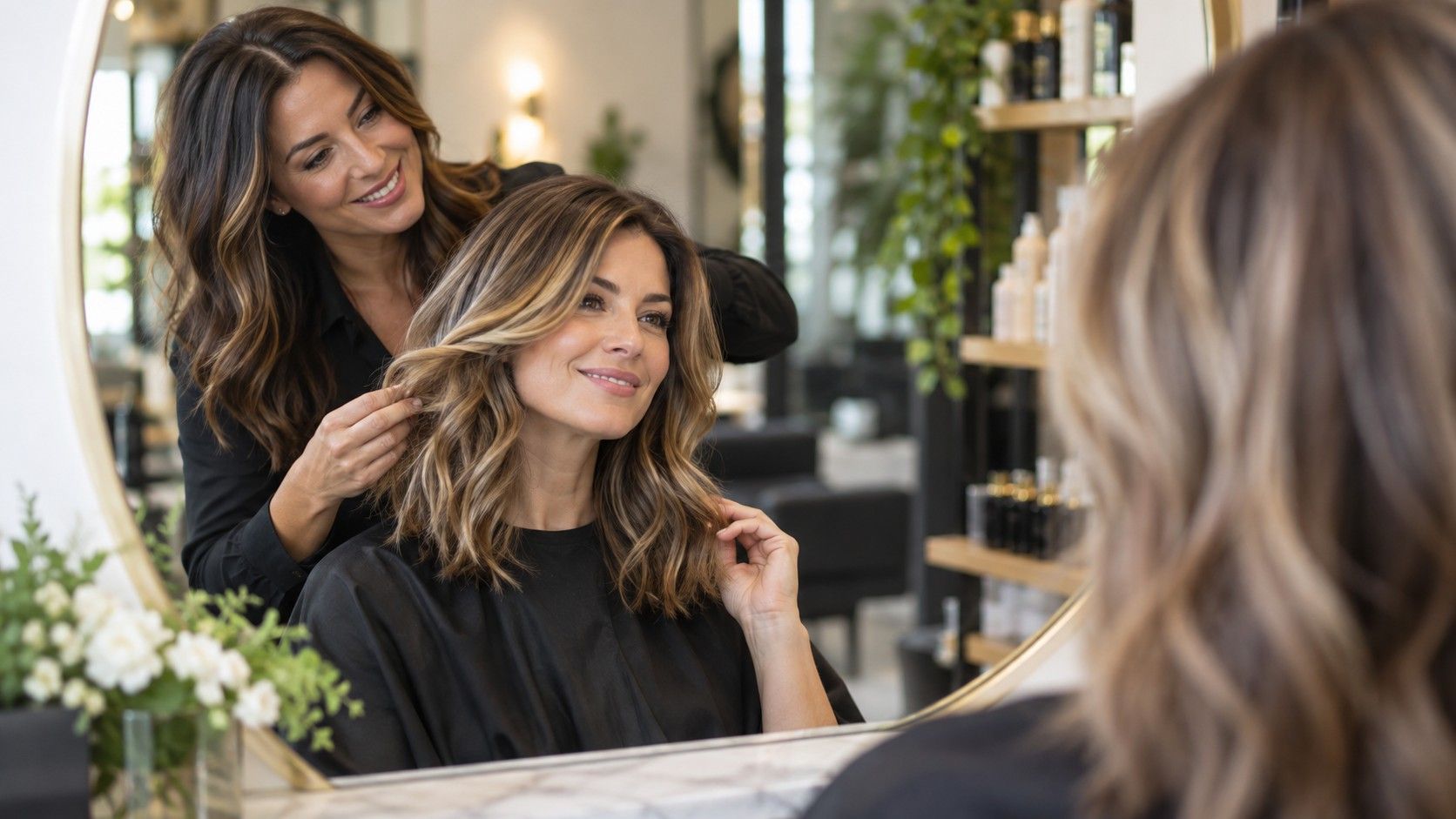
A haircut and color change can make each other look far better, or quietly work against each other. A beautiful highlight pattern disappears when too much length is removed; a precise new bob loses some of its impact if the color was planned for hair that used to be much longer. The calm way to approach a big appointment is to decide what must change, what needs protecting, and what you are willing to maintain after the salon mirror stops being kind.
See why the cut and color are one visual decision
Color changes how you read the shape of a haircut. Fine highlights can make layers appear more separated, while a single rich color makes a blunt perimeter look denser and sharper. That is why a reference photo with a lived-in balayage and long waves does not translate automatically into a cropped, one-length bob. The techniques may both be good, but they are showing different things.
The haircut changes where color sits as well. A face-framing colour section that begins near the jaw can look intentional on a lob and suddenly become a high-contrast stripe after a shorter cut. Layers lift, fold, and expose underlayers that a colorist may not have expected to be visible. If you are considering both services, say so at the start of the consultation rather than presenting the color photo after the cutting plan is complete.
Hair condition belongs in the same conversation. Bleaching, repeated heat styling, and fragile ends limit how aggressively you can change both at once. Sometimes the best result is a compact fresh cut with a gentler gloss or partial highlight, not a full lightening session on hair that already needs several inches removed. That is not a disappointing compromise; it is how a color stays attractive after its first week.
Decide what has to change first
Begin with a short list of priorities. Perhaps your real goal is to remove damaged length. Perhaps you want to stop looking washed out, or you have grown tired of a heavy, shapeless mass of hair. These are different jobs. If the shape is the urgent problem, settle the target length and silhouette first. If the color is the emotional reason for the appointment, be clear about the depth, warmth, and contrast you actually want to see.
In many cases, the stylist cuts before final color placement because the new perimeter and layers determine where the light pieces should go. A rough shape may be established first, then color applied, with final dry refinement after. Other salons prefer to color first when the service involves careful correction or a large transformation. There is no universal order to demand; what matters is that the professional explains how the order serves your particular hair.
Use language that can be checked in the mirror. Say “I want the lightest pieces around my face but not a money-piece stripe,” or “I want to keep a solid line at the ends even if we add movement.” These instructions are more useful than asking for the best haircut and color for me as if there is one answer hidden in a chart. A good plan turns taste into visible landmarks.
| Primary goal | Useful planning focus | Question to ask |
|---|---|---|
| Remove damage and look fuller | Set a healthy perimeter, then choose low-stress color | How much must be cut for the ends to look substantial? |
| Go noticeably lighter | Protect condition and plan where brightness will show after the cut | Can this be done in one visit without compromising the ends? |
| Make a bob or lob more interesting | Use color to support the line, not distract from it | Will the placement look good when hair is straight and tucked behind an ear? |
| Keep length but add change | Face framing, gloss, and restrained layers | What will still be visible once the hair grows a few inches? |
Understand what layers do to color placement
Layers make color move. When hair is curled or blow-dried, short pieces lift away from the head and reveal contrast underneath. That can produce a lovely dimensional effect, but it can also make a bold highlight look chopped into separate bands. If you usually wear your hair straight, ask to see the color with a straight finish too. A placement that is subtle in a wave may look much more graphic on smooth hair.
Long layers tend to give a softer, stretched-out effect. They work well with balayage and low-contrast ribbons because the color has room to blend through the length. Shorter layers around the face can make a bright section appear sooner and more often, which is useful when you want brightness near the eyes but less useful if you dislike frequent root or toner appointments.
A blunt cut asks for a different kind of restraint. With a strong baseline, broad chunky contrast can pull the eye away from the clean shape. Fine painted pieces, a subtle root shadow, or a glossy dimensional single process often suits the cut better. This is not a rule against bold color. It is simply worth deciding whether the main character is the perimeter, the color contrast, or the texture created by styling.
Build a reference set the stylist can really use
One perfect photo is rarely enough. Bring a small set: a picture showing the length and cut you like, another showing color depth or placement, and at least one person with texture and density close to yours. Include a photo of what you do not want if the risk is specific—very warm blond, heavy stripes, too-short face framing, or thin ends. A clear “not this” can save a lot of interpretation.
Look beyond the front view. Ask whether the photo shows a center or side part, straight hair or waves, and bright outdoor light or a studio finish. A color can look two levels lighter in sunlight, while curls can conceal how much highlighting exists beneath the surface. The more you understand the image, the less likely you are to blame the salon for not reproducing its lighting and styling setup.
Be honest about your own baseline. If you have box color, henna, prior bleach, extensions, or a recent permanent treatment, say so even if it feels irrelevant. These details affect what can safely happen. A strand test or a phased plan may be needed, and that is much better discovered in consultation than midway through an appointment when the clock and the budget are already under pressure.
Plan timing, budget, and upkeep before saying yes
A large change can take longer than expected, especially when lightening, toning, cutting, and styling all happen in one day. Avoid booking immediately before an important event if you have never worked with the salon or made a major shift. Give yourself time to live with the color in daylight and the cut after your first ordinary wash. The salon reveal is only the beginning of the evidence.
Ask for the maintenance rhythm in plain terms. A sharp fringe or bob may need a trim every few weeks; bright face framing might need toner or a gloss on a different schedule; a rooted, softer color can grow out more quietly. These visits have separate costs. If the total maintenance feels unrealistic, adjust the plan now by choosing a longer fringe, lower contrast, or a cut that remains attractive as it grows.
Home routine affects the investment. Color-safe shampoo, heat protection, and gentler water temperature help, but they do not have to become a cabinet full of expensive bottles. Ask which one or two habits make the greatest difference for your color and ends. On fine hair, heavy masks may flatten the cut; on lightened curls, more moisture may be essential. The advice should match your hair, not the retail shelf.
Leave with a plan for the first two weeks
Ask the stylist when to wash, how to style the new layers or fringe, and which parting best supports the cut. If the color was toned, understand that the first few washes may soften the fresh-salon shade. That is normal, but you should know whether it is expected to settle warmer, cooler, or simply less glossy. A quick phone note is enough; you do not need to memorize every product name.
Photograph the result in daylight from the front, side, and back before you leave if you can. It gives you a record of the intended placement and shape, helpful when you are styling at home or discussing a small adjustment. Pay attention to how the hair behaves after two or three regular washes. A new cut can settle, and a color can look different once the salon blowout is gone.
The best haircut and color for me is therefore not a preset combination. It is a coordinated decision that respects your hair's condition, highlights the feature you care about, and fits the money and time you can spend afterward. When cut, color, and upkeep have been discussed together, the change is much more likely to feel like yours rather than a look borrowed for one afternoon.