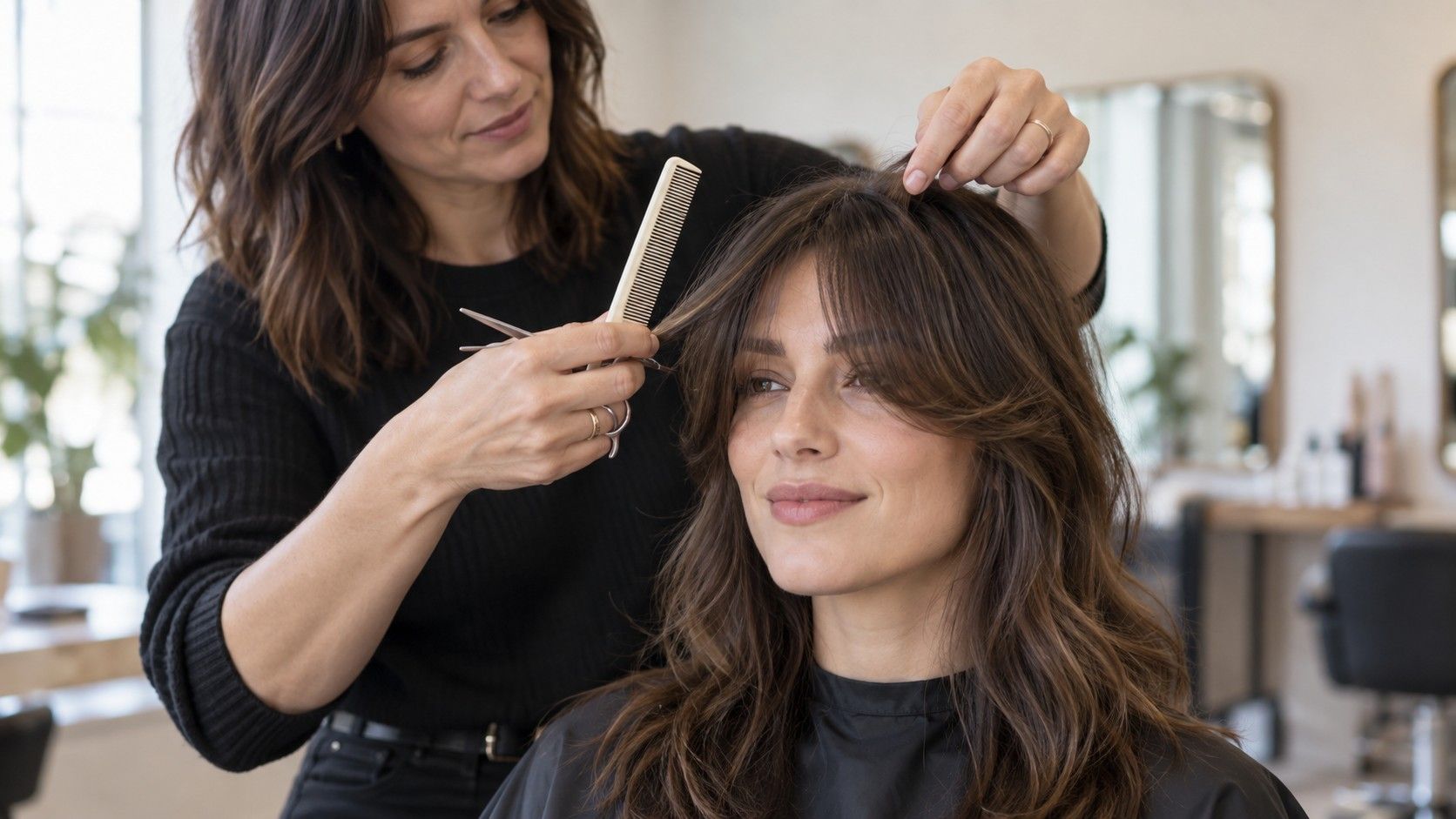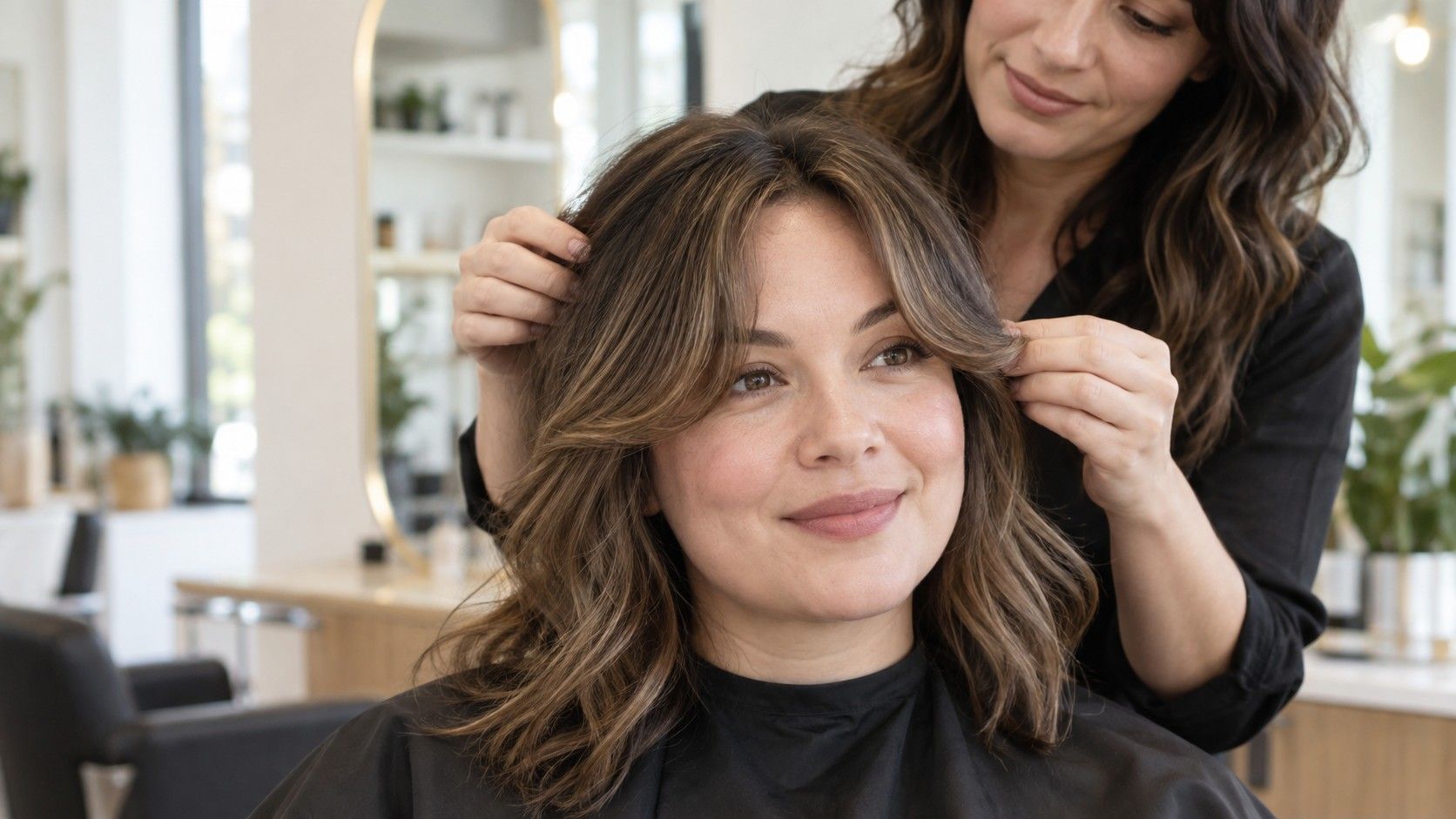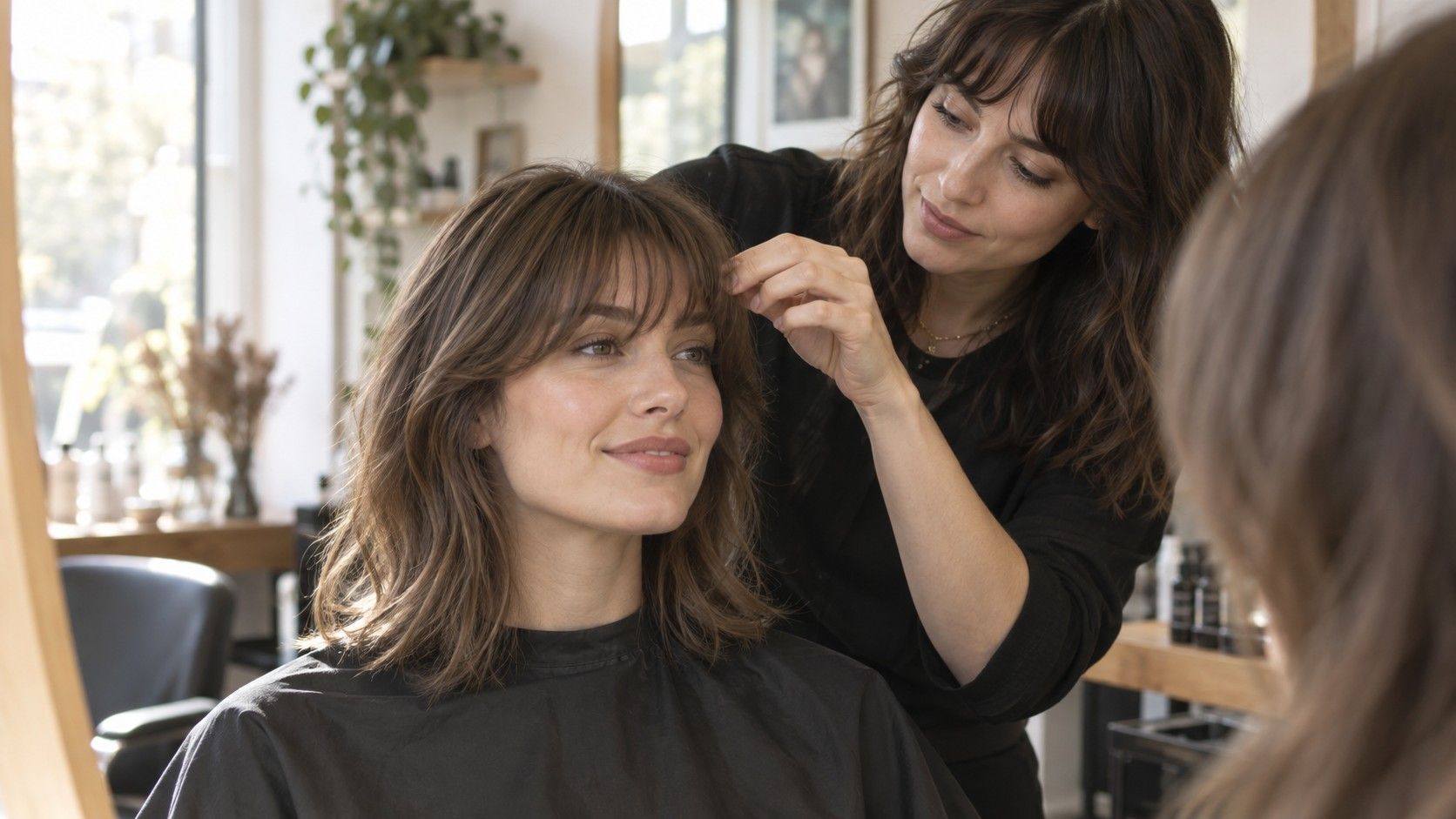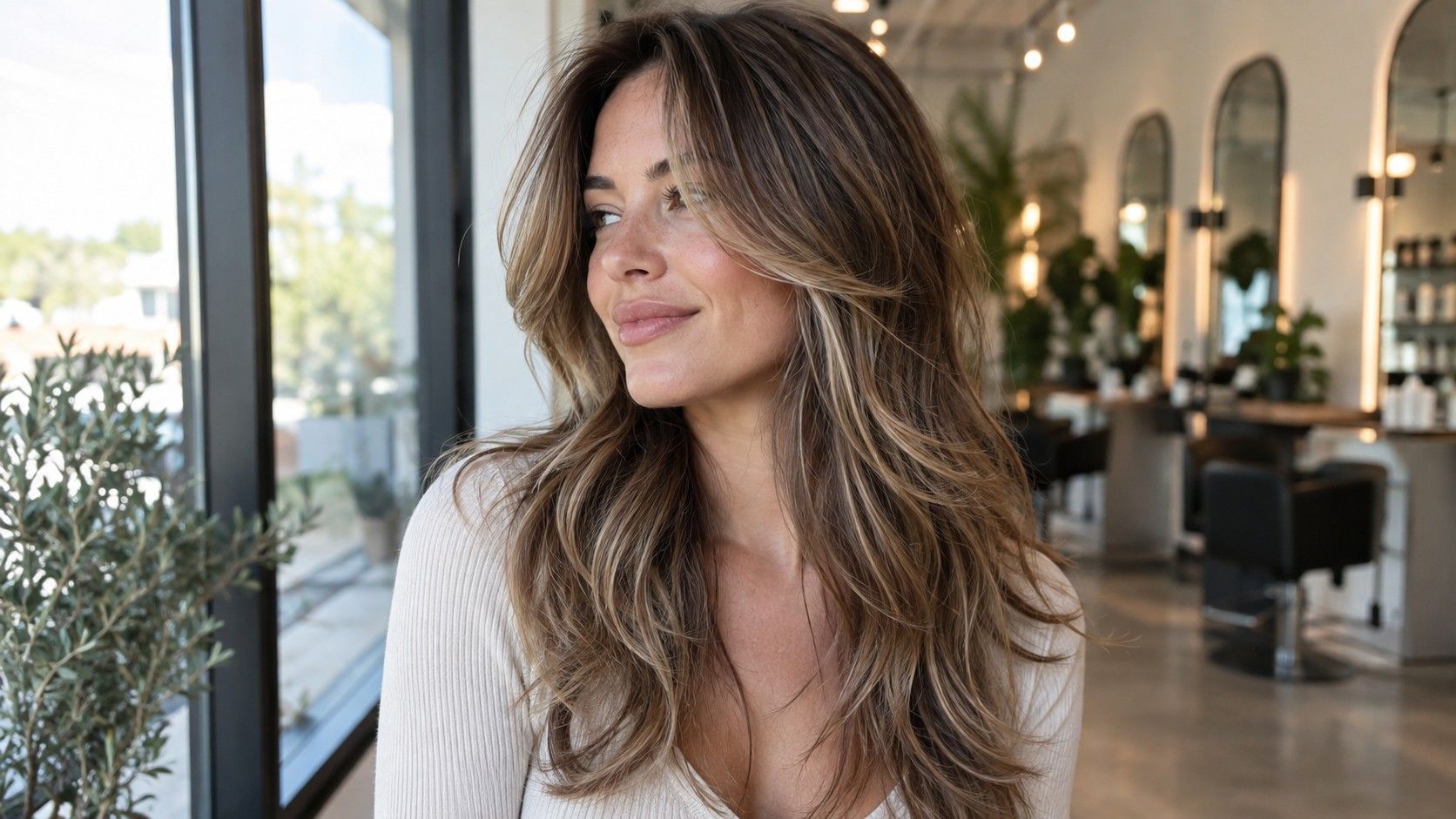
A butterfly cut can air dry well, but it will not air dry like the salon video that sold you on it. Those floating, rounded front layers are usually built with a blowout, a round brush, and hair that has been directed away from the face while warm. Air drying reveals the actual agreement between your density, curl pattern, and cut. That is not bad news. It just means the best version of an air dried butterfly cut is a softly layered haircut with movement, not a permanent at-home blowout.
Know what changes when the round brush leaves the picture
The classic butterfly cut has shorter face-framing layers around the cheeks and longer layers through the back. A blowout makes the shorter pieces lift and flick outward, giving the illusion of a lot of volume without removing the overall length. Left to air dry, the same pieces follow gravity and their natural bend. On straight hair they may lie closer to the face; on wavy hair they may form a loose curtain; on curls they may spring up more than expected.
That difference matters at the consultation. If you say you want the exact swoop shown in a styled photo but never use heat, the hairdresser may cut a very short front layer to force the effect. Once it dries naturally, that layer can look disconnected, especially around the cheekbone. A better target is a shape that looks intentional when it settles and becomes more dramatic only when you choose to blow it out.
Check the reference photo for clues. Is there obvious root lift? Are the ends turned out in the same direction? Does the hair look unusually smooth compared with your own texture? Those are signs of styling rather than proof that the cut alone makes that shape. A useful haircut survives the day after washing, not only the final five minutes in the chair.
Texture and density decide how easily layers will settle
Loose waves are often the easiest match for an air dried butterfly cut. They give the layers somewhere to sit, and a light styling cream can encourage the front pieces to curve away from the face. Fine straight hair can also wear it, but needs restraint: too many short layers remove weight and can make the ends appear thin. In that case, longer internal layers and a modest face frame are more reliable than a dramatic crown.
Thick hair has enough material for visible movement, yet the wrong placement can create a heavy shelf. Ask the stylist to look at where your hair expands once dry. A layer that starts at the widest point of naturally bulky hair may make that area look wider still. Removing bulk underneath, rather than stacking more short layers above it, is often the quieter solution.
Curly and coily textures can use the same broad idea of a rounded, face-framing shape, but the cut should be planned curl by curl or in the hair's natural fall. A smooth butterfly silhouette is not the goal. The key is avoiding short top layers that spring above the rest of the shape and leave a triangle around the face. Dry observation is far more valuable here than an impressive wet cutting pattern.
| Hair pattern | Air-dry result to expect | Safer layer choice |
|---|---|---|
| Fine and straight | Soft movement, little automatic lift | Long layers with a subtle face frame |
| Medium with waves | Natural separation and bend | Cheek-to-chin face layers |
| Dense and straight | Weighty ends unless shaped carefully | Internal weight removal, not a short crown |
| Curly or coily | Spring and volume vary by section | Dry, texture-led shaping |
Keep the front layers connected to the rest of the haircut
The front pieces are where an air dried butterfly cut can go wrong. A face-framing layer that begins near the cheekbone needs a route into the next layer and then into the length. If there is a big empty gap, it reads as two short pieces attached to long hair. Ask the stylist to pull the front section forward and show where it meets the hair behind it. The connection should be visible even before any curling brush is involved.
Your usual part matters here. A centre part distributes face framing evenly, while a deep side part sends more hair to one side and can make one layer seem much shorter. If you swap parts often, say so. The cut can be softened to tolerate both, but a very precise, symmetrical front shape is less likely to stay symmetrical after a quick change.
Do not assume more layers are the cure for limp hair. Sometimes limpness comes from residue, a part that has dried in one place for months, or hair that is simply too heavy at the roots. More cutting can remove enough weight to make the ends feathery without solving the root problem. A small amount of crown lift at the cut is useful; a staircase of short layers is not.
Use a minimal air-dry routine rather than chasing a salon finish
Start with hair that is damp rather than dripping. Apply a light leave-in or mousse through the mid-lengths and ends; avoid coating the roots or the shortest face layers. Product weight is one of the quickest ways to turn soft layers into flat, separated sections. Comb through once, make your normal part, and twist or guide the front pieces away from the face for a minute while they begin to set.
Then leave them alone long enough to dry. Repeatedly touching the front is tempting, especially when one piece looks strange at twenty minutes, but it pulls apart the natural clumps in wavy hair and creates fluff in curly hair. If you need help, use clips at the roots for a little lift, then remove them before the hair is completely dry. A diffuser on low heat is a middle option when the weather is cold or your hair takes hours to dry.
Once dry, judge the shape from several angles. If the front layers bend inward, a tiny amount of finger-twisting can redirect them. If they are flat every time, try changing the part for the first ten minutes of drying. That small habit can be more effective than buying another styling product.
Ask for a cut that works on day two as well as day one
Before the first cut, be clear about the routine: “I usually air dry, I wear my hair down most days, and I want the front to look connected without a round brush.” Bring a photo of the desired amount of layering, but also show a normal unstyled photo of your own hair. This gives the stylist the evidence they need for density, wave pattern, and the places that tend to puff up.
Ask whether the haircut can be checked dry before the final detail work. That is particularly helpful when you have a cowlick or uneven wave around the hairline. A small adjustment after natural drying is more meaningful than a perfectly smooth inspection under a blowout. If the stylist says the reference depends on styling, that is useful honesty, not a failed consultation.
Plan to live with the cut for a week before deciding it needs correction. Air drying takes a few washes to reveal its habits, and your parting or product amount may need a small adjustment. The aim is not to make every day look identical. It is to get layers that fall well when you do almost nothing, with the option of a fuller butterfly effect when you feel like picking up a brush.