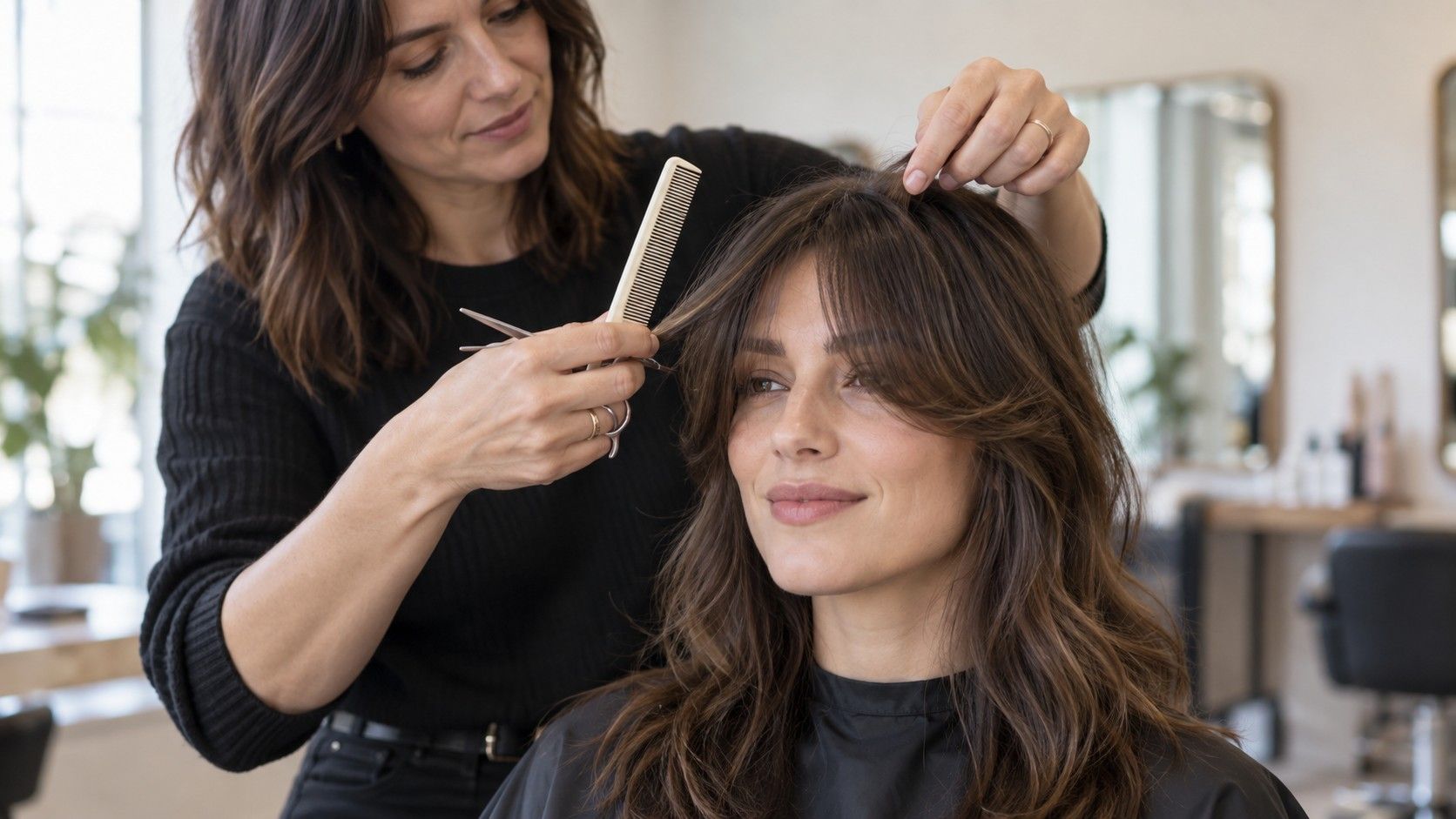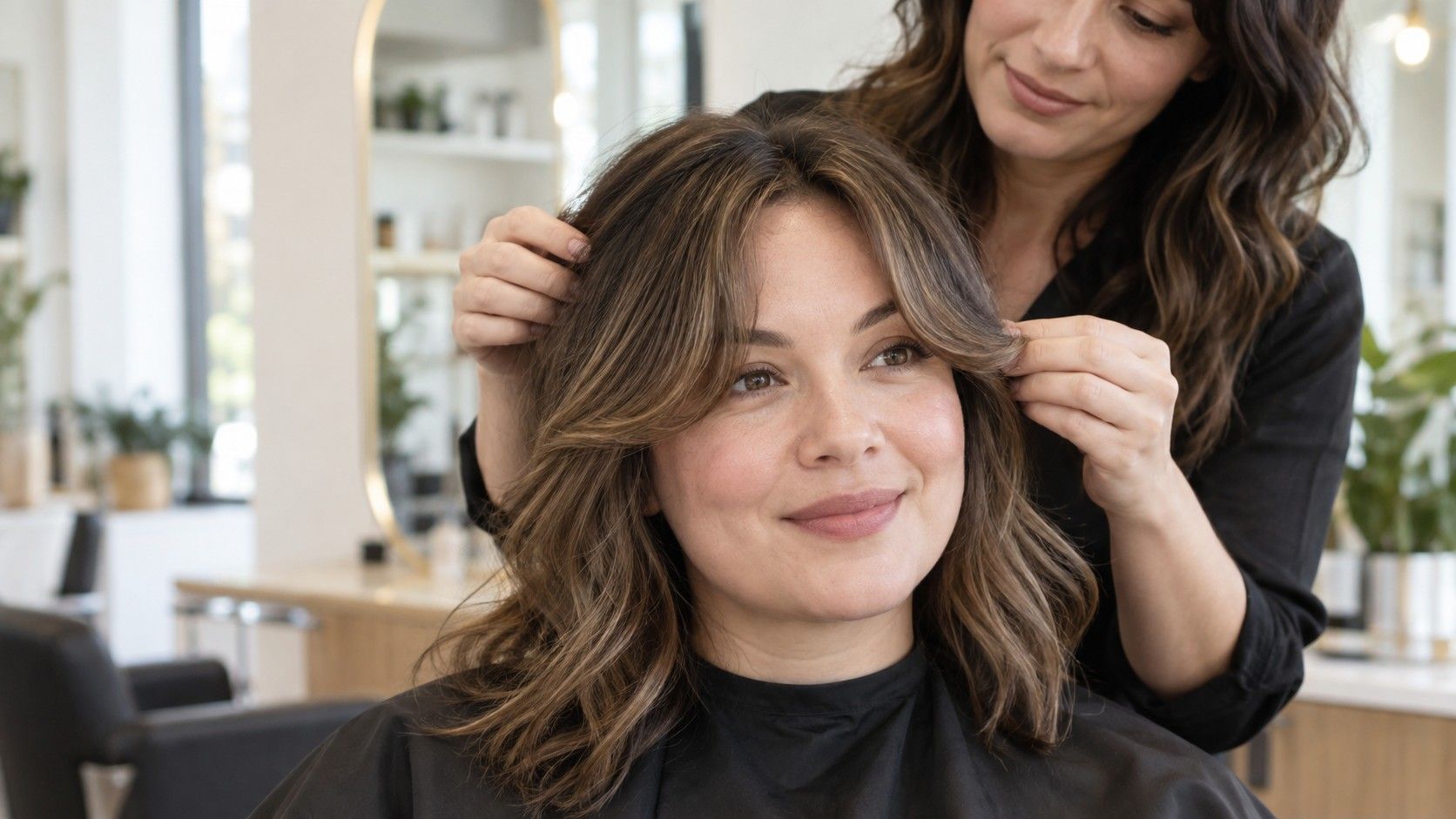
A bob is not simply any haircut that lands above the shoulders. That loose definition is how a salon photo and the result in your bathroom mirror end up feeling unrelated. A useful bob cut definition starts with the shape at the nape, the deliberate perimeter around the head, and the way the cut holds itself when there is no blow-dry doing all the work.
Start with the line you can see at the nape
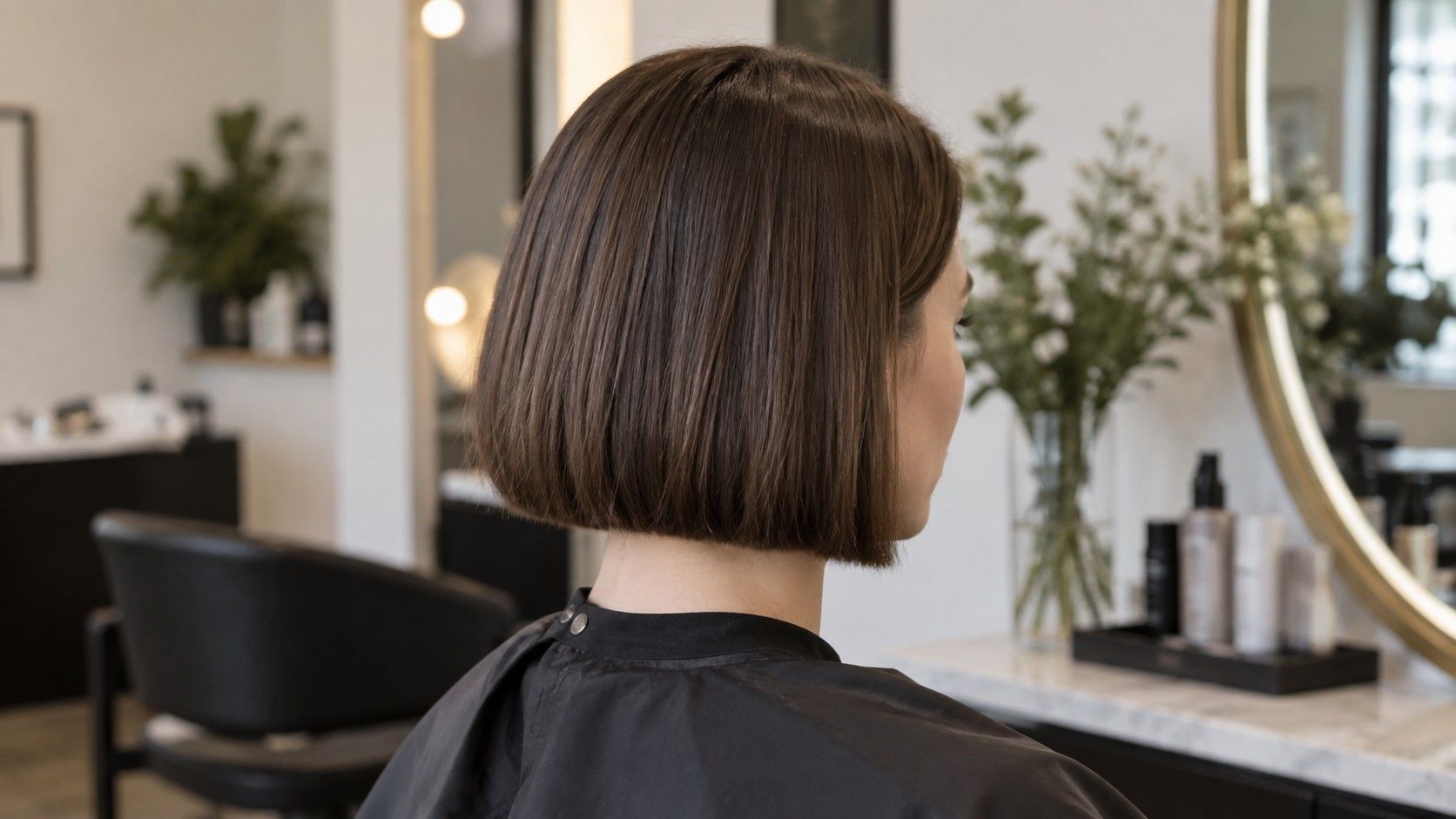
The classic bob has a visible decision at the back of the head. It may sit at the jaw, skim the chin, or reach the top of the shoulders, but the nape is part of the design rather than an accidental middle stage of growing hair. When a stylist gathers the hair at the back and establishes a clean baseline, that perimeter becomes the spine of the cut.
Look at a side profile before choosing a reference. A bob can slope slightly from a shorter nape toward a longer front, or it can run almost level. Either way, the lower edge should have intention. If the back disappears into an undefined mass while the front is merely shorter than usual, it is often a short layered cut rather than the bob haircut definition most people mean.
There is room for softness. A blunt bob does not require a ruler-straight edge on every strand; hair moves, cowlicks exist, and a small amount of point cutting can stop the line from looking heavy. The practical test is simple: after a normal wash and air-dry, can you still tell where the shape ends? If yes, the perimeter is doing its job.
Why a lob is related but not interchangeable
A lob, or long bob, keeps the broad silhouette of a bob but shifts the landing point lower, usually from around the collarbone to just above it. The distinction matters because that extra length changes how the hair bends, tucks behind an ear, and survives a humid commute. A jaw-length bob behaves like a geometric cut. A collarbone lob has more swing and more weight pulling it down.
There is no single international measurement that suddenly turns a bob into a lob. A person with a short neck may experience a shoulder-grazing cut as a lob, while the same length on a taller frame reads shorter. Instead of arguing over inches, ask for the front and back landmarks: chin, neck, shoulder, and collarbone. Bring the photo, then say which landmark you want when your hair is dry.
| Feature | Bob | Lob |
|---|---|---|
| Typical visual landing point | Jaw to upper shoulder | Shoulder to collarbone |
| Back shape | Often clearly structured at the nape | Usually softer, with more length and swing |
| Daily behavior | Shows parting and cowlicks quickly | Tucks, clips, and ties back more easily |
| Grow-out feeling | Shape changes noticeably within weeks | Transitions more gradually into medium length |
The table is a guide, not a verdict. Thick, straight hair can make a shoulder-length cut look compact and bob-like; fine hair with long face-framing pieces can look like a lob even when the back is shorter. The useful part is choosing the daily behavior you want, not winning a label.
Blunt, graduated, and layered are different construction choices
A blunt bob has a relatively solid lower edge and similar apparent length around much of the head. It is the version people notice in a sharp salon image because the perimeter catches the eye. On dense straight hair it can look polished with very little effort, but on hair that expands at the sides, an entirely blunt edge may form a triangle unless the internal weight is handled carefully.
A graduated bob is shorter or more stacked at the nape and longer toward the face. Graduation is not just a fashionable angle. It removes or redistributes weight so the back can sit close to the neck and show a rounded profile. The caveat is maintenance: a strongly graduated nape grows out fast, and a tiny change in the back can be more obvious than several centimeters of length at the front.
A layered bob uses interior layers to create movement, reduce bulk, or support a wave. It can still have a clear outer line. The common misunderstanding is calling every textured cut a layered bob; if the outer perimeter has been thinned away so much that the bottom looks wispy and random, the identity of the bob weakens. Ask where the layers begin and whether the stylist plans to preserve a visible baseline.
The back view tells you more than the front photo
Front-facing inspiration photos flatter almost every short cut. They hide the nape, the crown, and the weight distribution that decides whether the style works after two sleeps. Before committing, inspect a back view taken in ordinary light. You want to see whether there is a blunt line, a softly rounded stack, or a layer pattern that suits your density.
Cowlicks at the nape deserve an honest conversation. A low, strong swirl can flip out a short baseline unless it is left a little longer, cut with the direction of growth, or styled each morning. This is not a reason to avoid a bob; it is a reason not to copy a model whose nape behaves differently. A good stylist checks this with the hair dry or nearly dry instead of discovering it at the end.
The crown matters as well. Fine hair can benefit from a compact back that creates lift, while thick hair may need hidden weight removal so the cut does not become helmet-like. Neither solution is visible in a one-line definition, but both explain why two people can ask for the same French bob and leave with shapes that should not be cut identically.
Face framing changes the impression without changing the category
The front pieces are where a bob becomes personal. A chin-length line can emphasize the jaw, soften it with a curved bend, or lengthen the face through an A-line that stays longer near the cheeks. A fringe can turn the same basic form into a French bob, while a deep side part gives a blunt bob a more dramatic, asymmetrical feel.
Do not rely only on face-shape charts. Glasses, a habitual side part, and whether you tuck one side behind your ear are practical details that matter more on short hair. If you always wear a center part, say so before the first section is cut. Moving a bob from a middle part to a deep side part can expose a different amount of weight and make the perimeter appear uneven even when the cutting was precise.
For a bob cut reference, collect photos with hair texture close to yours and include at least one unstyled image. A smooth, glossy Italian bob can be beautiful, but it sets a different expectation from a softly air-dried layered bob. The question at the consultation is not whether you like both. It is which version you are prepared to style on a Tuesday morning.
Plan for maintenance before the first appointment
Shorter bobs are usually at their crispest for four to eight weeks, depending on the nape detail and how quickly your hair grows. A blunt jaw-length bob can often stretch longer if you like a softer line. A tight stacked back and precise fringe ask for earlier appointments. Budgeting this rhythm is more sensible than treating every salon visit as an unpleasant surprise.
At home, the main task is learning your hair's drying pattern. Blow-drying with a nozzle and a round brush can sharpen a blunt perimeter; a diffuser can preserve a wave without puffing up the sides. Use less product than you would on long hair at first. A pea-sized amount of cream or smoothing product travels farther when the ends sit near the jaw.
Grow-out is not a failure mode. A bob often becomes an appealing soft lob if the neckline is tidied and the front is allowed to gain length. Tell your stylist if that is your likely path. They can avoid an extremely short nape that creates an awkward shelf later. The most satisfying bob is not just flattering on day one; it has a believable next chapter when you decide you want length again.