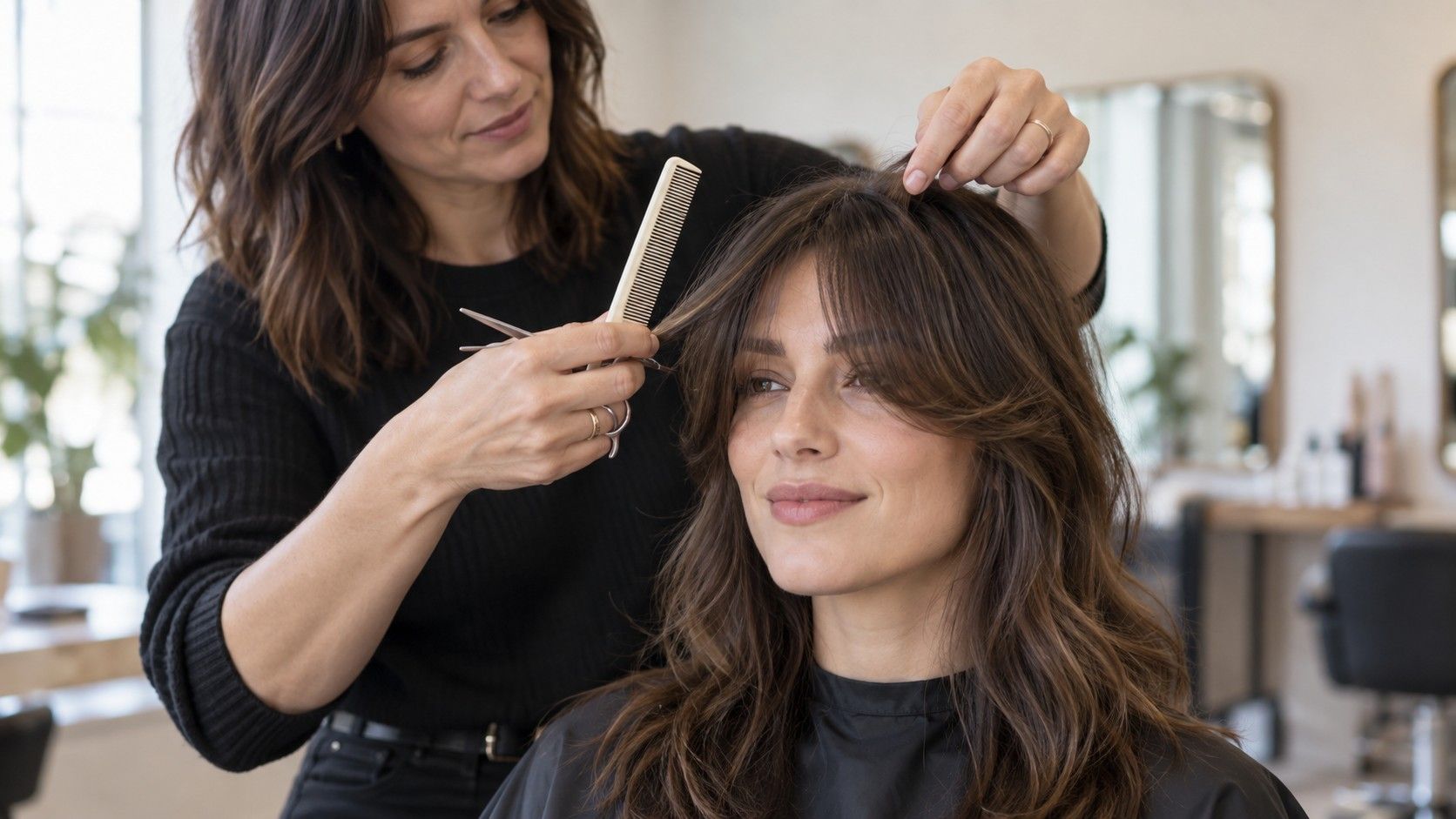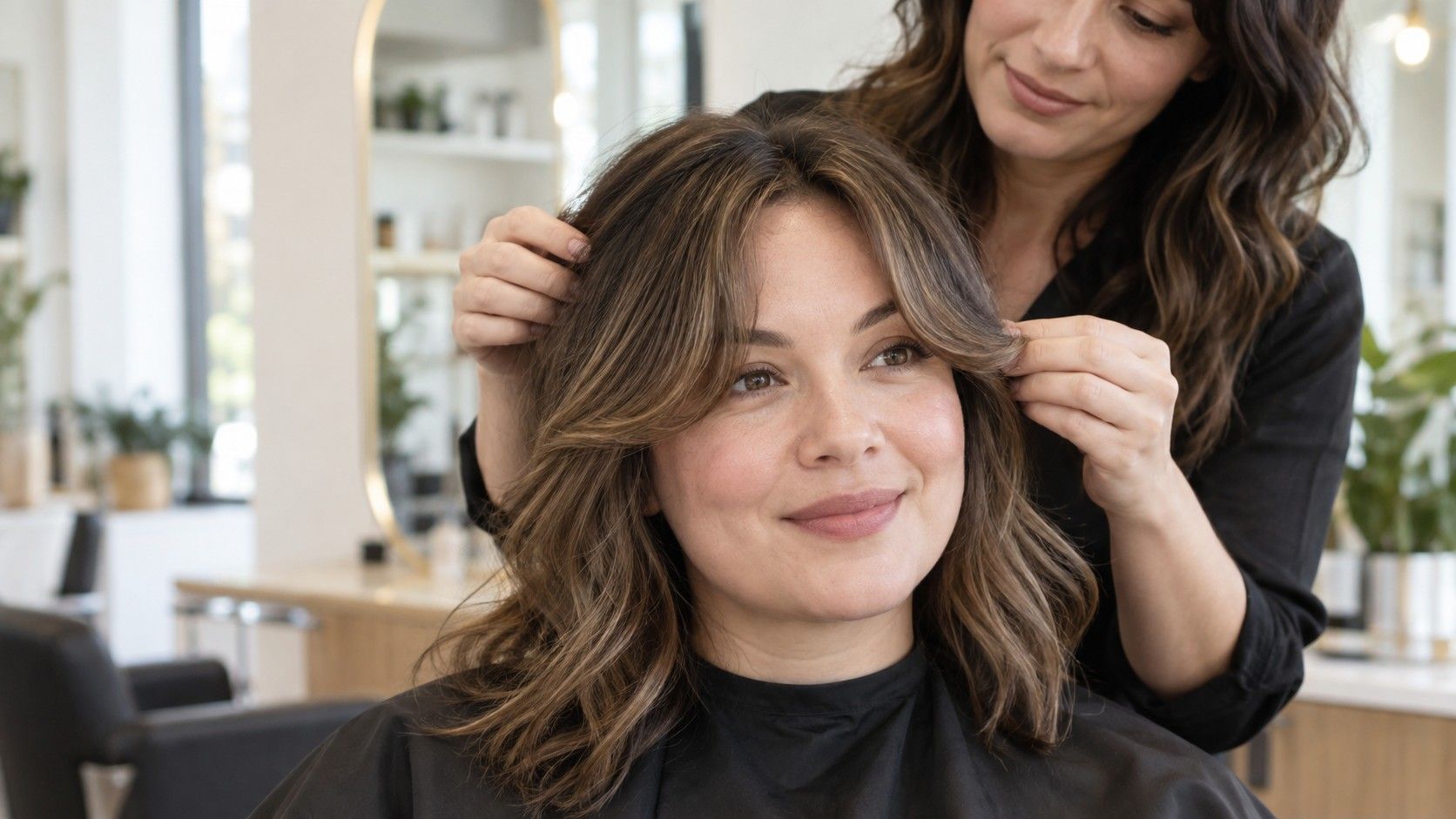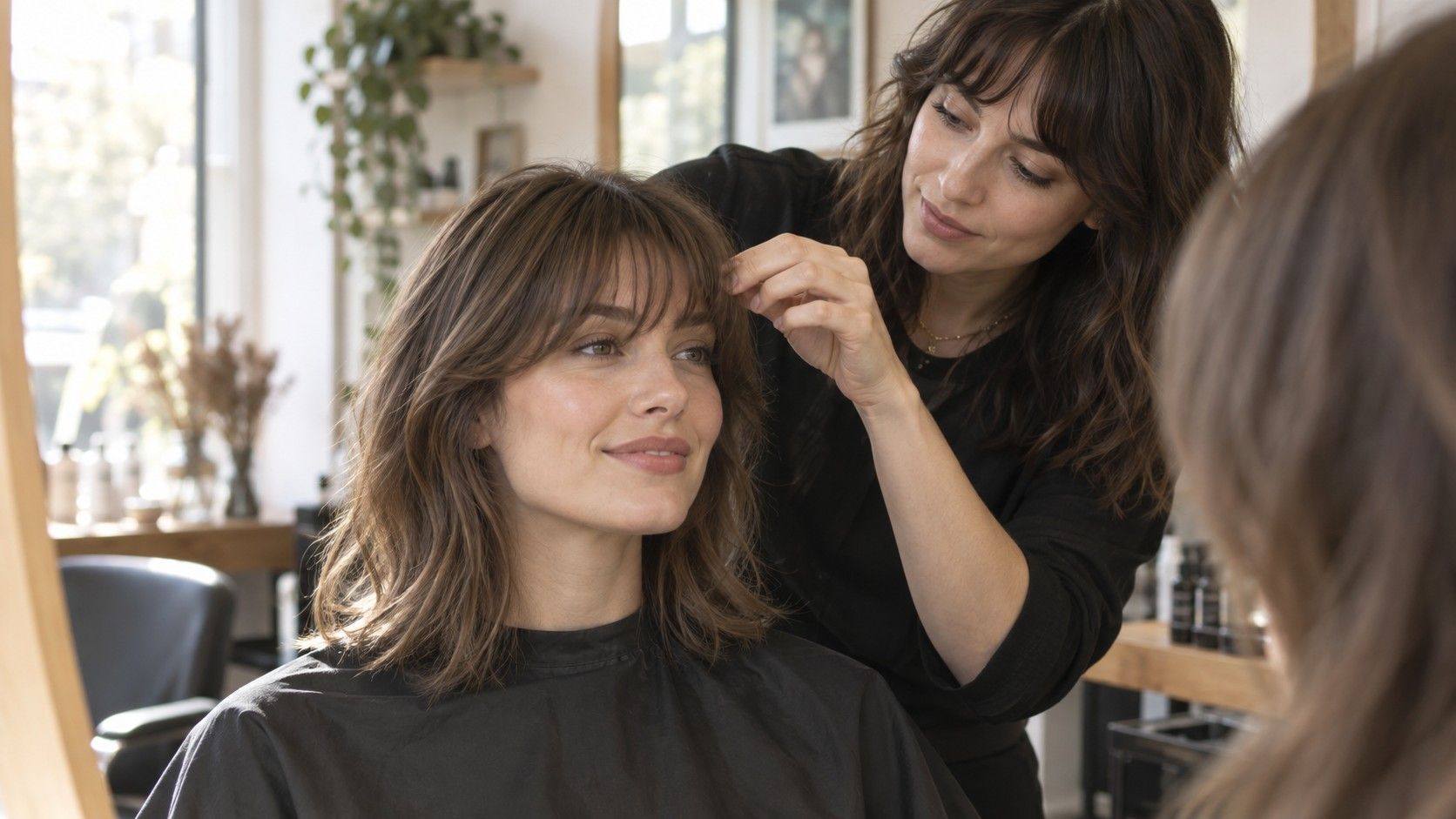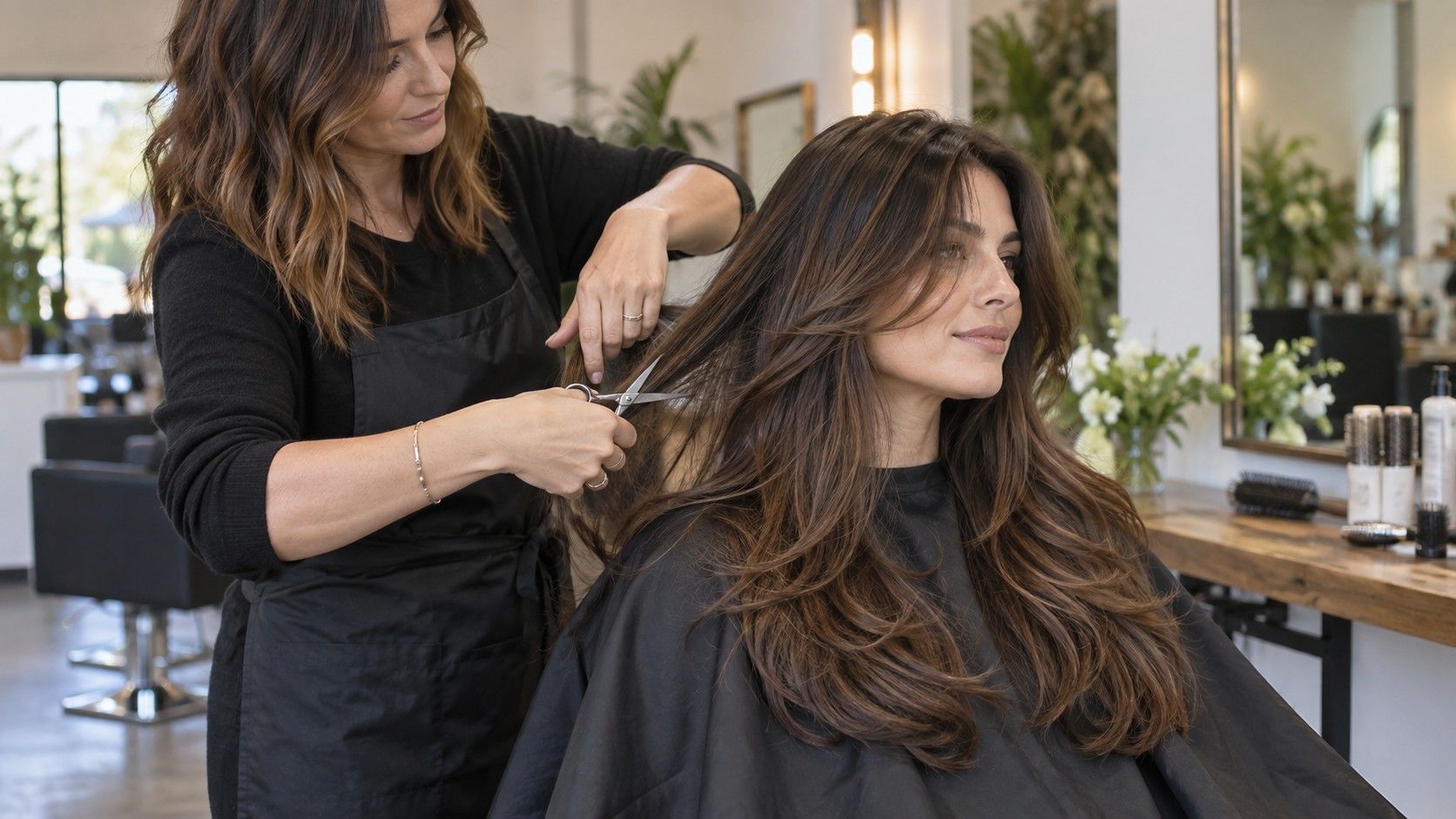
Thick hair is often described as lucky hair, usually by someone who has never tried to dry it before work or watched a promising bob expand in humidity. The best haircut for thick hair does not aim to make it disappear. It puts weight in useful places, removes it where the cut becomes bulky, and gives you a shape that still makes sense when you do not have forty minutes for styling.
Thickness, density, and texture are different problems
Hair can be thick because each strand is wide, because there are many strands, or because waves create a large silhouette. These call for different cutting decisions. Dense straight hair may feel heavy but sit close to the head; thick wavy hair can build width at the sides; coarse curly hair may need enough weight to avoid a fuzzy triangle. Saying only “my hair is thick” leaves out the useful part.
Look at the hair when it is dry and in its usual part. Notice where it expands: at the crown, through the sides, below the ears, or at the ends. Then consider your climate. Humidity can make a cut with too many short layers puff outward, while dry weather may make the same hair seem easy. A good consultation begins with that ordinary evidence rather than a single polished photo.
Pick length according to the bulk you want to manage
A short cut can feel lighter, but it is not automatically easier. A thick bob needs internal shaping or it can form a broad block at the jaw. A longer front, a softly tapered nape, or weight removal hidden inside the cut can keep the outline calm. If you want a crisp blunt bob, expect regular trims and some heat styling to maintain the line.
Medium-length cuts are often the most flexible for thick hair. A collarbone lob gives enough length for a ponytail while keeping the ends from feeling like a curtain. Long layers can work beautifully when they begin low enough to preserve a substantial perimeter. Short layers piled around the cheeks often add bulk exactly where people are trying to reduce it.
Long hair does not need to be one heavy length. The useful question is whether the weight is dragging the roots flat or making the ends look solid and healthy. Subtle internal layers can release movement without turning the bottom into thin, uneven wisps. That distinction matters when hair is dense: removing too much from the ends can make styling harder, not easier.
| Cut direction | Why it helps | Potential issue |
|---|---|---|
| Internal layers | Remove bulk while preserving the outside line | Need an experienced, restrained hand |
| Collarbone lob | Balances weight and offers easy styling options | Ends may kick at the shoulders |
| Long low layers | Keep thick ends substantial while adding movement | Too many layers can create width |
| Textured bob | Prevents a dense bob from looking blocky | Requires a clear shape at the nape |
Know when layers help and when they create more bulk
Layers are not a universal cure for thick hair. They help when there is a heavy shelf of hair with no movement, particularly around the lower half. They can create problems when every layer begins high and tries to lift outward. With waves, that can produce a pyramid silhouette: quiet roots, then a sudden wide section at the cheeks and shoulders.
Ask where the first layer will start and what it is meant to do. A layer below the chin can release long hair without making the face area fuller. Face-framing pieces can be useful, but they should work with your natural bend. If your hair springs outward at the cheekbone, do not put the shortest layer precisely there unless you want that effect.
Ask precise questions about weight removal
“Thinning” can mean several techniques: point cutting, slide cutting, internal layers, texturizing, or thinning shears. They do not produce the same result. Overused thinning shears can leave coarse, thick hair with short pieces that stick out and make it look frizzier. Used sparingly inside a stable shape, they can remove pressure without damaging the perimeter.
Ask the stylist how they plan to remove weight, where it will be removed, and how it will grow out. If you wear your hair naturally wavy, ask to see it partly dry before the final texturizing. The pattern that looks smooth under a blow-dry may expand once the hair returns to its normal texture. A careful stylist will adapt the plan rather than repeating a technique by habit.
Build a maintenance routine around your actual hair
Thick hair usually benefits from products that control moisture without coating everything. Start with conditioner that provides slip, then use a heat protectant and one styling product chosen for your finish: a cream for smoother lengths, mousse for controlled lift, or a gel for defined waves. Layering five products because a video told you to often creates dull, heavy hair.
Drying technique makes a large difference. For a smoother cut, aim the dryer downward and work in sections so the roots do not stay damp under the surface. For waves, avoid roughing the hair up with a towel; squeeze it and let the cut's internal shape do some work. A satin pillowcase or loose overnight braid can also reduce the morning width that leads people to over-style.
Keep the shape between appointments
Thick hair can hide a haircut for a while, then suddenly look too heavy at the bottom. Book based on the cut rather than a fixed calendar: a sharp bob may need six to eight weeks, while long layers can wait longer. Take photos of the front, side, and back in the first good week after a cut. They give the next appointment a far better target than a generic thick hair haircut image.
Tell the stylist whether you want less drying time, less side bulk, or more visible movement; those goals lead to different choices. The best haircut for thick hair respects the density instead of fighting it. Keep enough weight for a clean shape, remove the pressure where it overwhelms you, and choose a maintenance level you can sustain after the salon finish has disappeared.
Pay attention to the tools you already own before choosing a shape. If you rely on a quick dryer and brush, ask for a perimeter that settles with that routine. If you diffuse curls, make sure the internal layers are evaluated after diffusing rather than only when stretched smooth. A haircut should remove work, not create a new obligation.
At home, resist the urge to thin the ends yourself when the hair begins to feel heavy. The apparent bulk may come from a grown-out nape or a lost internal shape, both of which are easier to correct with a measured salon adjustment than with random cuts near the perimeter.